
What Core Aeration Actually Does to Your Soil
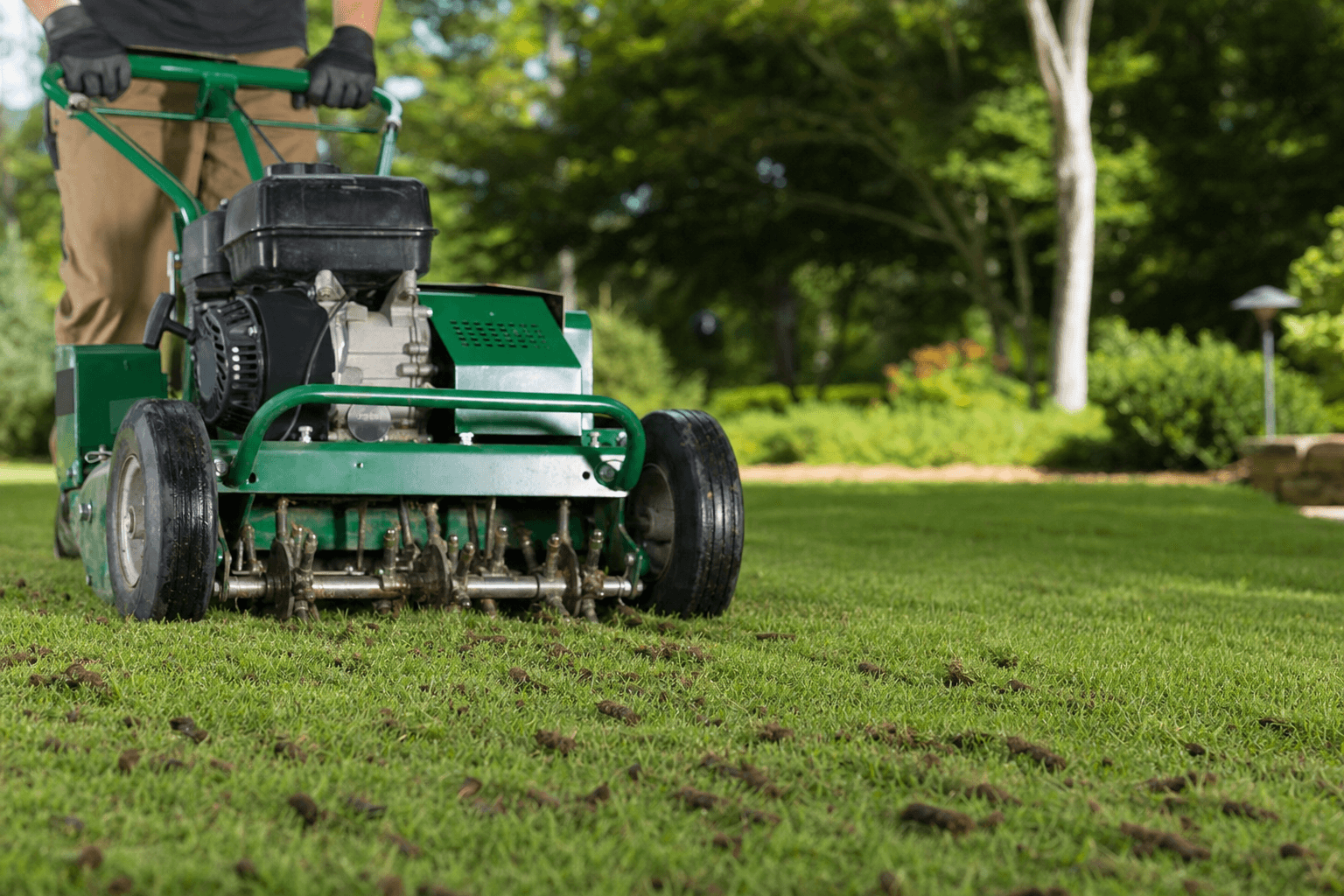
Core aeration is not the same as spiking or slicing. Those methods push soil aside, which can actually worsen compaction in clay-heavy ground. Core aeration uses a machine fitted with hollow tines that physically remove small plugs of soil from the lawn, typically three to four inches deep and spaced a few inches apart across the entire surface. Those plugs get deposited on top of the turf and left there to break down naturally.
The holes left behind do the real work. They create direct channels for water, oxygen, and nutrients to reach the root zone without fighting through compacted layers. Roots respond by growing laterally into those open spaces, which builds a denser, more resilient turf over the following weeks. If you have been putting down fertilizer and seeing weak results, compaction is often the reason. The inputs are sitting at the surface rather than reaching the roots.
For lawns that also struggle with thatch buildup, aeration accelerates the breakdown of that organic layer by improving microbial activity in the soil. We sometimes pair aeration with topdressing to push that process further, especially on lawns with heavy clay content.
Why Core Aeration Leander TX Timing Follows a Different Calendar Than You Might Expect
Most of what homeowners read about aeration online is written for cool-season grasses in northern climates, where fall aeration is the standard recommendation. Leander runs almost entirely on warm-season turf, primarily Bermuda and St. Augustine, and those grasses follow a completely different growth cycle.
For warm-season lawns, aeration is most effective during active growth, which in this region runs from late spring through mid-summer. June is actually an ideal month to schedule it. The turf is pushing hard, temperatures are climbing, and the grass has the energy to fill in those aeration holes quickly. If you wait until fall, the grass is slowing down and recovery takes much longer, sometimes leaving the lawn looking rough heading into dormancy.
The soil conditions around Leander and neighboring Cedar Park also factor into timing. Much of this corridor sits on expansive clay soils that tighten considerably as summer heat sets in. Aerating in June, before the ground bakes solid in July and August, allows the tines to penetrate more effectively and pull cleaner plugs. By August, we are often working against soil that has hardened to a point where tine depth is compromised.
Homeowners near the 183A corridor or out toward the Leander ETJ boundary tend to have some of the most compacted soil we encounter, largely because many of those neighborhoods were built on heavily graded lots where topsoil was stripped during construction and clay subsoil was left at the surface.
What to Expect During the Service Visit
When our crew arrives for core aeration leander tx, the first step is a quick assessment of soil moisture. Aeration works best when the ground has some moisture in it, not waterlogged, but not bone dry either. If your area has been in a dry stretch, we may recommend irrigating the night before to soften the surface layer. If you have a moisture management system, that is easy to coordinate.
The machine we use is a walk-behind core aerator with hollow tines spaced to pull plugs every few inches. For most residential lots in Leander, the full pass takes between 30 and 60 minutes depending on yard size and layout. We make overlapping passes on heavily compacted areas. The plugs we pull are left on the surface. We do not rake them up. They break down within one to two weeks, and that breakdown actually returns organic matter and microorganisms back into the soil.
After aeration, the lawn is in a receptive state that we take advantage of. This is the best window to apply pre-emergent or post-emergent weed treatments , since the open channels allow product to move into the root zone more efficiently. It is also an effective time for overseeding if the lawn has thin areas, because the holes give seed direct soil contact rather than leaving it sitting on top of thatch.
How to Know Your Lawn Needs Core Aeration Leander TX Service This Season
There are a few reliable indicators we look for. First, water pooling or running off the surface rather than absorbing is a strong sign of compaction. Second, if you can push a screwdriver into the soil and it requires real force to get four inches deep, the ground is too dense. Third, thin or patchy turf that does not respond to fertilization or irrigation often traces back to root systems that cannot expand through compacted layers.
Lawns that see heavy foot traffic, including homes with kids and dogs, or properties near Round Rock and Liberty Hill that were built on disturbed soil, tend to need aeration on a more consistent annual or biannual schedule. A lawn that was aerated two or three years ago and has been under regular use since then is likely due again.
If you are also managing disease pressure or recurring insect activity , compaction can be a contributing factor there too. Poor drainage and oxygen-starved roots create stress conditions that make turf more susceptible to both. Our Georgetown aeration guide goes deeper on how soil structure connects to those secondary issues if you want more context on the relationship.
For broader homeowner context, University extension lawn care guidance and EPA lawn and garden water-saving guidance offer useful background on planning, safety, and maintenance decisions related to this kind of work.
June is the window where core aeration leander tx delivers the most return on investment for warm-season lawns. The grass is growing, the soil is workable, and the recovery timeline lines up with the strongest growth period of the year before the heat of July fully arrives. If your lawn has been underperforming despite regular care, this is usually the first place we look. Reach out through our contact page to schedule an assessment before the summer scheduling calendar fills in.
Need Help With This Service?
Request a quote and we will build a practical lawn plan for your property.
Book Consultation