
Good lawn and pest decisions should be grounded in practical science, including EPA integrated pest management principles and local extension guidance such as the University of Georgia Extension publications library .
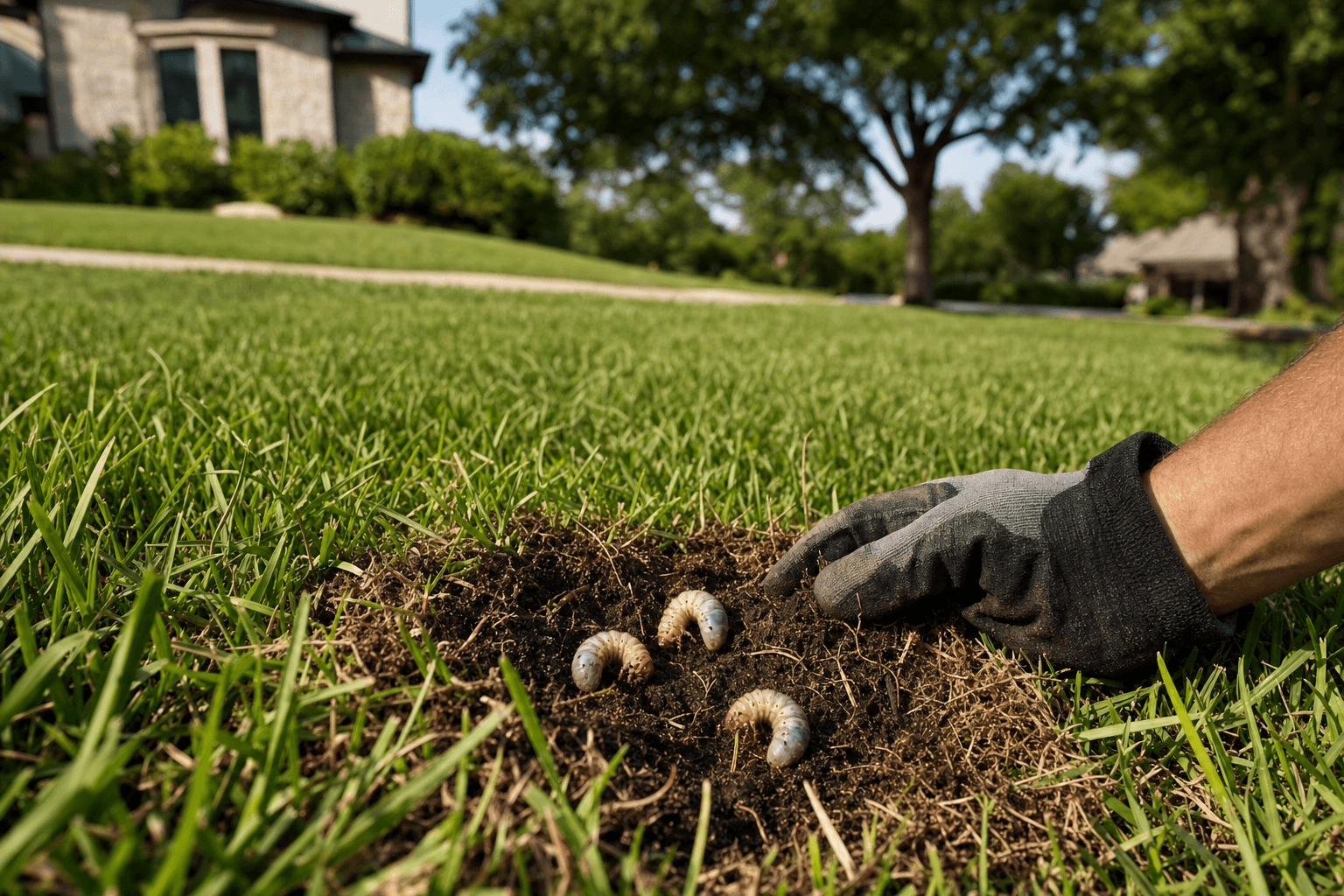
We see this pattern every spring, especially in April when the soil warms up and turf is supposed to be responding to fertilization inputs. The lawn looks like it should be recovering, but it is not. Homeowners add more water, apply more product, and nothing changes. That is because white grubs, the larvae of beetles like June bugs and masked chafers, have been feeding on your grass roots through the fall and winter. By the time you notice the damage on the surface, the root system underneath has already been compromised. Fertilizer cannot feed roots that are no longer there.
The frustrating part is that the lawn can look almost normal until it does not. Grub damage tends to reveal itself in stages, and that delayed reaction is exactly why so many homeowners in the Florence area are caught off guard. You are not dealing with a surface problem. You are dealing with something that has been working against your lawn for months, quietly, just below the soil line.
What Is Actually Causing the Damage
White grubs are the larval stage of several beetle species common to Central Texas. Adult beetles lay their eggs in the soil during summer, and those eggs hatch into C-shaped larvae that spend the fall feeding aggressively on grass roots. As temperatures drop, the grubs move deeper into the soil to overwinter. In spring, they migrate back up toward the surface to feed again before pupating. That second round of feeding in March and April is often what finally pushes a struggling lawn over the edge.
A healthy root system can tolerate some grub pressure. But when populations are high, the root zone gets severed to the point where the turf cannot anchor itself or absorb water and nutrients. That is why fertilization seems to do nothing. The grass simply has no functional root system left to support new growth. You can confirm grub activity by pulling back a square foot of turf in a damaged area. If you find more than five grubs in that sample, you have a population that warrants treatment.
Why Grub Control Florence TX Is a Recurring Problem in This Area
Florence sits in Williamson County on the edge of the Lampasas Cut Plain, where soils shift between rocky limestone and heavier clay-loam profiles depending on where you are on the property. That variation matters because clay-heavy soils retain moisture longer, and moist, warm soil in summer is exactly the environment female beetles seek out for egg-laying. Properties near the low-lying areas around the San Gabriel River corridor tend to see heavier grub pressure because of this.
Central Texas also has a long warm season, which extends the window of beetle activity compared to northern climates. That means the eggs are laid earlier, the larvae develop faster, and the damage window is longer. If you have been maintaining your lawn with a regular fertilization program and still seeing unexplained decline, grubs are one of the first things we check for in this region. They are that common here.
Common Mistakes Homeowners Make
The most common mistake is treating the symptom instead of the cause. Brown patches get blamed on drought, shade, or disease. Homeowners apply fungicide, adjust irrigation, or overseed, and none of it works because the actual problem is underground. We have also seen situations where a lawn gets overseeded before grub control is applied. The new seed germinates, but the grubs are still active and the new turf never establishes properly. That is a frustrating and expensive outcome that is entirely avoidable.
Timing is the other major issue. Over-the-counter grub products are often applied too late in the season to be effective, or they are applied as a curative treatment when a preventive approach would have been far more efficient. Preventive treatments applied in late spring target young larvae before they cause significant root damage. Curative treatments applied in fall or early spring can still help, but they require different chemistry and more precise application. Getting the timing and product selection wrong means spending money on something that does not move the needle.
For a broader picture of what your lawn needs this time of year, our Central Texas lawn care checklist walks through the full seasonal picture, including how grub pressure fits into a complete spring program.
The Actual Fix for Grub Damage
Effective grub control Florence TX involves selecting the right active ingredient for the timing of treatment. Preventive products with imidacloprid or chlorantraniliprole work best when applied before egg hatch in late spring and early summer. Curative products containing trichlorfon or carbaryl can address active grub populations in the soil but require more precise application and are harder on beneficial soil organisms. After treatment, a recovery plan matters just as much as the application itself. That typically means restoring the root zone through aeration, topdressing, and in some cases overseeding, so the turf can rebuild what the grubs took.
Grub control does not exist in isolation. It is one layer of a lawn health system, and it works best when it is coordinated with your fertilization and soil health program.
When to Call a Professional for Grub Control Florence TX
If you are finding more than five grubs per square foot in multiple locations across your lawn, that is not a borderline situation. That is a population that needs professional-grade treatment. The same applies if you have already treated with a store-bought product and the damage is continuing, or if the affected areas are expanding week over week. Grubs do not self-correct, and waiting tends to mean more turf loss and a longer recovery window.
Our team at Green Dream Lawns has been treating grub pressure in the Florence area long enough to know which products work in Central Texas soils, when to apply them, and how to pair grub control Florence TX with a recovery plan that actually restores the lawn. If your turf is showing the signs we described and you are not sure what you are dealing with, reach out to us here and we will help you figure out what is actually going on before more of the lawn is lost.
Need Help With This Service?
Request a quote and we will build a practical lawn plan for your property.
Book Consultation