
Good lawn and pest decisions should be grounded in practical science, including EPA integrated pest management principles and local extension guidance such as the University of Georgia Extension publications library .
What Grubs Are Actually Doing to Your Lawn Right Now
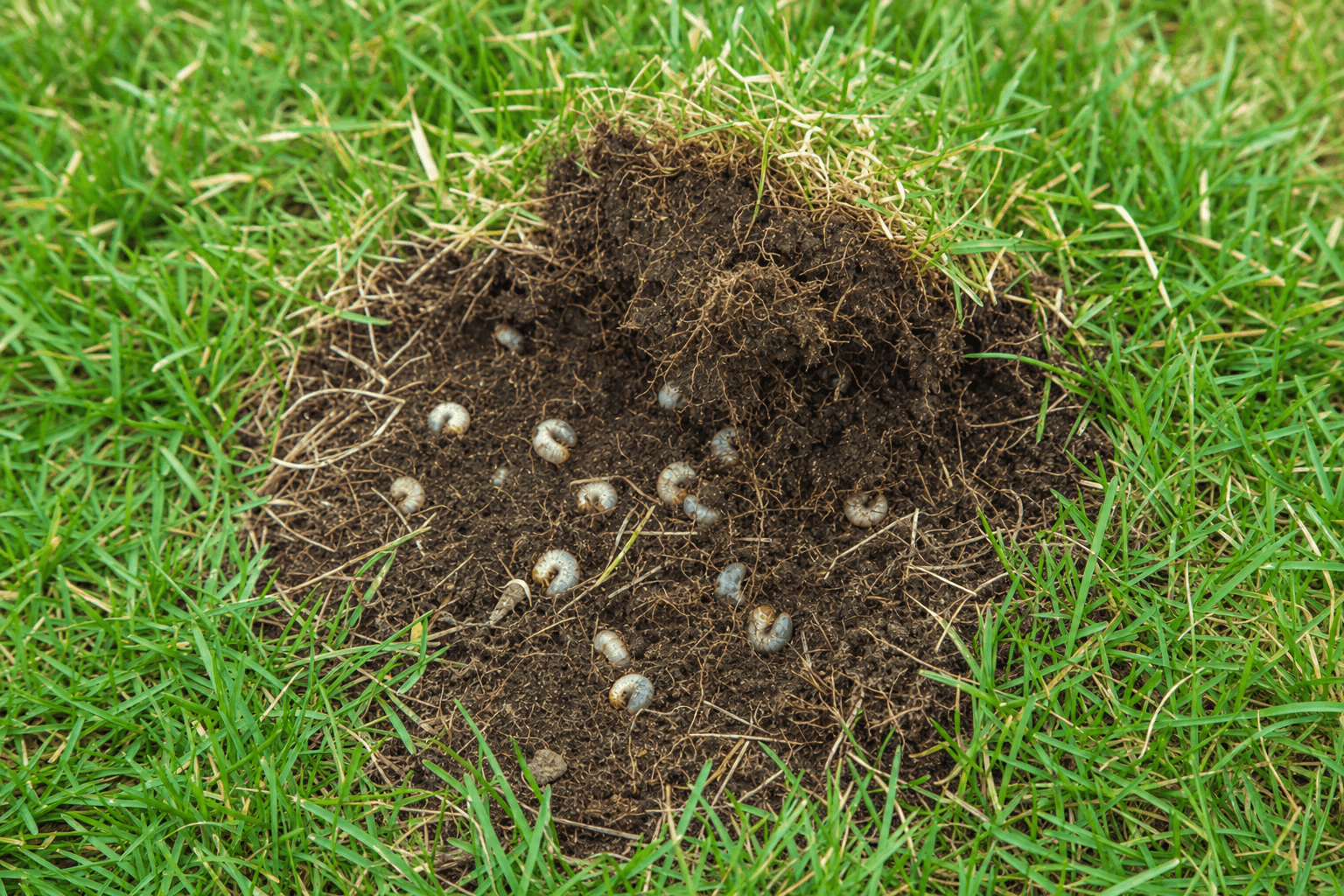
Grubs are the larval stage of beetles, most commonly June bugs and masked chafers, both of which are widespread across Williamson County. By mid-spring, last year's eggs have hatched and the larvae have spent the winter feeding on grass roots a few inches below the surface. In May, they're still shallow and actively feeding before they pupate and emerge as adult beetles in early summer.
The damage they cause isn't always visible yet. That's the tricky part. A lawn can look reasonably healthy in May while grubs are quietly severing root systems underneath. By July or August, when Central Texas heat is already stressing your turf, those weakened roots give out fast. Grass dies in irregular patches, and because the timing lines up with summer drought stress, a lot of homeowners assume heat or irrigation is the problem. By then, grub control Georgetown TX becomes reactive rather than preventive, and reactive treatment is always harder.
A simple tug test tells you a lot. Grab a handful of grass in a suspect area and pull gently. If the turf lifts like loose carpet with little resistance, root damage is likely already underway. You can also dig a one-square-foot section about three inches deep. Finding more than five to ten grubs in that sample is a threshold that warrants treatment.
Why Grub Control Georgetown TX Timing Is Non-Negotiable
Preventive grub treatments work by targeting young larvae before they grow large enough to do significant damage and before they move deeper into the soil profile. In Georgetown's climate, that window runs roughly from late April through early June. After that, larvae mature, burrow deeper, and become significantly harder to reach with surface-applied treatments.
There's also a secondary timing concern. Adult beetles emerge in early summer and begin laying eggs for the next generation. If you're treating an active infestation while a new egg cycle is starting, you're already fighting on two fronts. Getting ahead of grub control Georgetown TX in May means you're addressing the current larvae and creating a treated zone before new eggs hatch.
Our team pairs grub treatments with aeration when possible for a straightforward reason. Aeration opens the soil, reduces compaction, and allows treatment products to penetrate more effectively. Georgetown's clay-dominant soils, which we cover in more detail in our post on why Central Texas soil makes aeration more than a nice-to-have , can act as a barrier that limits how well surface treatments reach the root zone. Breaking that compaction layer first makes the grub treatment more effective, not just the aeration.
Signs Your Lawn May Already Have a Grub Problem
You don't need to dig up your yard to spot warning signs. Here's what to look for during your next walk-around:
- Spongy or soft turf that feels uneven underfoot, especially in sunny areas with good moisture
- Increased bird activity, particularly starlings and grackles probing the lawn, because they're hunting grubs
- Armadillo or skunk digging in small, concentrated patches overnight
- Irregular brown patches that don't respond to watering the way the rest of the lawn does
- Grass that peels back easily when you apply light pressure at the edge of a brown area
If you're seeing two or more of these signs together, that's a strong indicator. Georgetown's wildlife pressure is real, and armadillo activity in particular is a reliable early signal that something is drawing them to your soil.
What Green Dream Lawns Does Differently for Grub Treatment
Our approach to grub control Georgetown TX isn't a single product applied once and forgotten. We assess the lawn first, look at the soil profile, factor in your irrigation schedule, and time the application to match the larval stage we're dealing with. We also consider whether the lawn has had grub pressure in prior seasons, because properties that have had beetle populations nearby tend to see recurring cycles.
For lawns that are already showing root damage, we'll often discuss overseeding or topdressing as a recovery step after treatment. Treating the grubs stops the active damage, but it doesn't rebuild the root system or fill in bare areas on its own. A complete plan addresses both. If your lawn has also been dealing with other stress this spring, our spring lawn prep guide for Central Texas walks through how different services work together during this time of year.
The Window Closes in June, and Here's What That Means
If you're reading this in May, you're still inside the most effective treatment window. If you wait until late June, the larvae will have matured and moved deeper, making surface treatments significantly less reliable. You'd also be heading into peak summer heat with a root system that's already been compromised, which puts your lawn at serious risk of widespread die-off that takes the rest of the growing season to recover from.
Reach out to our team at Green Dream Lawns now to schedule a grub assessment before the treatment window closes. A conversation this week could be the difference between a healthy lawn in August and patchy, stressed turf that takes until fall to recover.
Need Help With This Service?
Request a quote and we will build a practical lawn plan for your property.
Book Consultation