Grub control in Liberty Hill, TX means applying a targeted insecticide to the soil at the right point in the grub's life cycle, either as a preventive treatment before eggs hatch or as a curative treatment once larvae are actively feeding. Preventive products work best applied in late spring to early summer; curative products are appropriate now, in late summer, when grubs are confirmed and actively causing root damage. Getting the timing and water-in steps right is what separates an effective treatment from one that produces no results.
Key Takeaways
- White grubs are at peak feeding depth and activity in August, making late summer the most urgent window for curative grub control in Liberty Hill, TX.
- Turf that pulls up like a loose carpet or shows irregular brown patches that do not respond to irrigation is a strong indicator of grub damage.
- Curative treatments are effective right now, but they require grubs to be actively feeding near the surface to work properly.
- Liberty Hill's clay-heavy soils can slow product movement, which is why watering in after treatment is a critical step in the process.
- A single grub control treatment does not guarantee long-term protection; annual monitoring and a preventive program are the most reliable approach.
What Grub Control Actually Involves
Most people think of grub control as simply spraying something on the lawn, but the process is more precise than that. White grubs , which are the larvae of beetles like the masked chafer and Japanese beetle, live in the soil and feed on the root systems of turfgrass. Because they are underground, the product has to move through the soil profile to reach them, and that movement depends heavily on soil type, moisture, and the specific chemistry of the product being used.
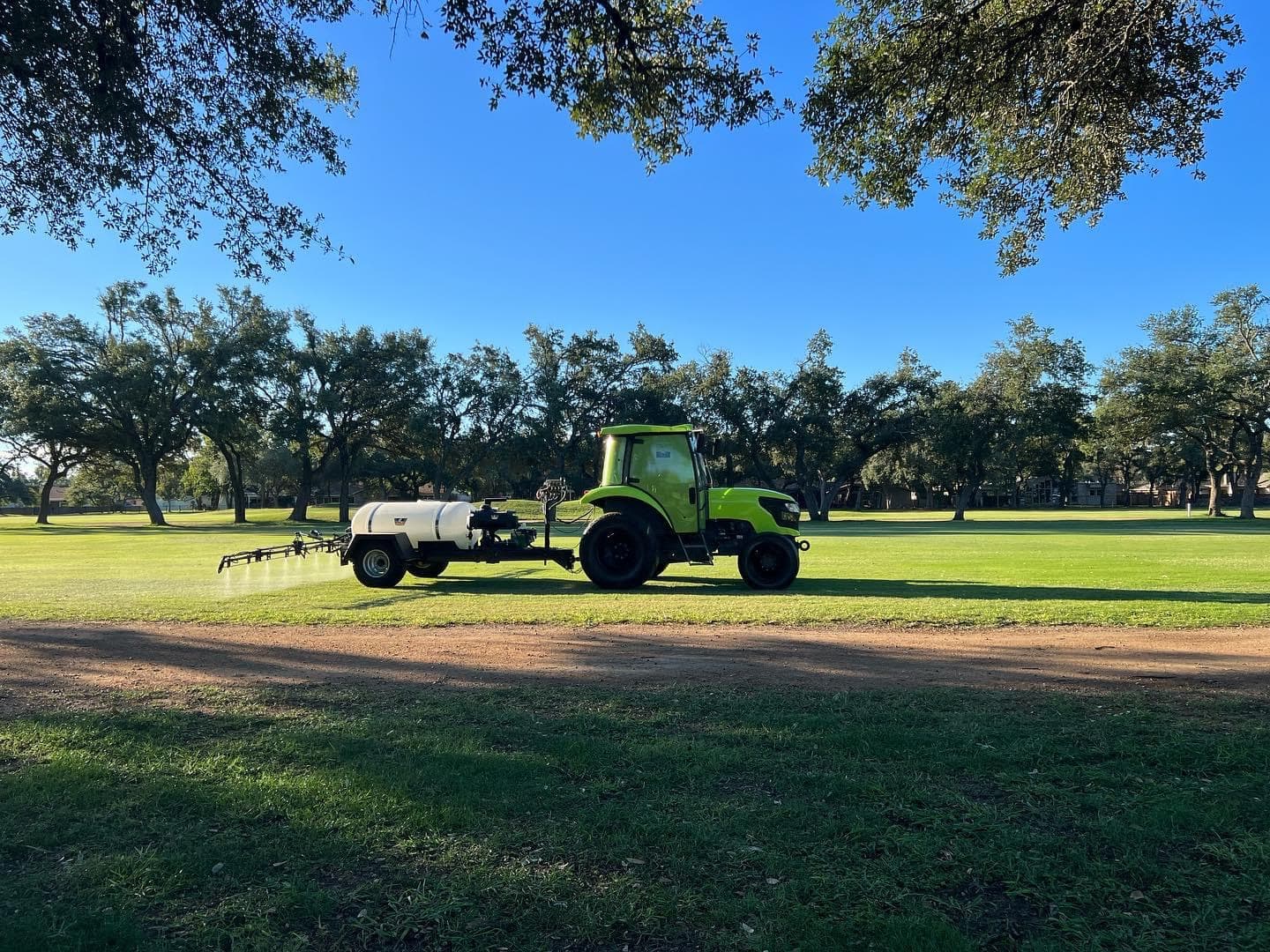
We use granular and liquid formulations depending on the situation and the time of year. Preventive products, typically neonicotinoids or anthranilic diamides, are applied before eggs hatch and have a longer residual window in the soil. Curative products, which are appropriate for the current August window, work on contact with actively feeding larvae and need to be watered in promptly after application so they can penetrate to the root zone where grubs are feeding. Timing the water-in correctly is one of the most important steps, and it is something that is easy to get wrong without experience.
Our grub control service accounts for the specific turf type, soil conditions, and confirmed pest pressure on each property before we select a product or application method. That matters more than most homeowners realize, because the same product applied at the wrong time or without proper water-in will not perform the way it should.
How Do I Know If My Lawn Has a Grub Problem?
This is the question we hear most often from Liberty Hill homeowners, and it is a fair one, because grub damage mimics drought stress almost perfectly in its early stages. Both conditions produce brown, thinning turf that looks like it simply needs more water. The difference becomes clear when you try to lift the turf. A lawn damaged by grubs will pull back like a loose piece of sod, because the roots have been severed. A drought-stressed lawn will resist, because the roots are still intact.
Other signs include soft, spongy areas in the lawn, increased activity from birds and armadillos digging into the turf, and irregular brown patches that expand even when irrigation is consistent. If you are seeing any of these symptoms right now, the timing is still workable for a curative treatment. We generally recommend a soil inspection to confirm grub presence before treating, because applying a curative product to a lawn that has drought damage rather than grub damage wastes both product and money.
For additional context, our blog post on preventive vs. curative grub control in Round Rock, TX walks through the decision-making process in more detail, and the same framework applies to Liberty Hill properties. If you missed the preventive window this spring, curative treatment in August is still the right move.
Why Liberty Hill Soil Conditions Affect How Grub Control Works
Liberty Hill sits at the edge of two distinct geological zones, and the soil varies significantly depending on which part of town you are in. Properties closer to the Highway 29 corridor tend to have heavier clay content, while lots further west and north toward the Burnet County line often have thinner topsoil over caliche and limestone. Both soil types create challenges for grub control in Liberty Hill, TX, just in different ways.
Heavy clay soils drain slowly, which means product applied to the surface can pool or run off before it reaches the root zone where grubs are feeding. In these situations, we pay close attention to pre-treatment soil moisture and post-treatment irrigation to ensure the product moves downward rather than laterally. On the thinner soils over caliche, the concern is the opposite: water moves through quickly, and the product window for contact with feeding grubs is narrower.
This is also why aeration plays a supporting role in a complete lawn health program. Compacted clay soils that have not been aerated are harder to treat effectively, because product penetration is limited. If your property has not been aerated recently, that is worth discussing alongside any grub control treatment.
Additionally, grub pressure does not exist in isolation. Lawns that are already under stress from lawn disease or nutrient deficiency are more vulnerable to grub damage and recover more slowly after treatment. A lawn fertilization program that supports root density going into fall gives treated turf a better chance of filling back in before winter.
What to Expect During and After Treatment
The actual application typically takes less time than most homeowners expect. Our team will inspect the turf, confirm grub presence and density, and then apply the appropriate product to the affected areas. For curative treatments in August, we apply to the full lawn if pressure is widespread, or to targeted zones if damage is localized.
After application, we will walk you through the irrigation requirements specific to your soil type. This is not optional. Watering in the product within the recommended window is what activates it and moves it to the feeding zone. If you have an irrigation system, we can coordinate timing with your existing schedule. If you are hand-watering, we will give you specific guidance on volume and timing.
Recovery after a successful treatment varies. Turf that has lost significant root mass will need time to regenerate, and in some cases, overseeding or topdressing may be appropriate in the fall to help the lawn fill back in. We also recommend checking for other lawn insect activity at the same time, since properties with grub pressure sometimes have concurrent pest issues that can slow recovery if left unaddressed.
We provide custom estimates after an on-site evaluation for grub control in Liberty Hill, TX, and you can reach our team here to schedule that visit.
Frequently Asked Questions
Is it too late to treat for grubs in August in Liberty Hill, TX?
No. August is actually the most appropriate time for curative grub control in Liberty Hill, TX, because grubs are actively feeding near the soil surface. Preventive treatments work better in late spring, but curative products applied now, with proper water-in, can stop active feeding and prevent further root damage before the grubs burrow deeper in the fall.
How many grubs per square foot is considered a problem in Central Texas turf?
Texas A&M guidance identifies five to ten grubs per square foot as a common threshold for treatment, though this varies by grass type and overall lawn health. Bermudagrass tends to tolerate slightly higher populations than St. Augustine before showing visible damage. We do a soil inspection before recommending treatment so we are working from actual counts rather than assumptions.
Will grub control also affect fire ants or other insects in my lawn?
Grub control products are targeted at soil-dwelling larvae and are not the same as broad-spectrum surface insecticides. They will not reliably control fire ants, chinch bugs, or other surface-feeding insects. If you have concurrent pest pressure, those issues are handled separately through our fire ant control or lawn insect programs .
Do I need to keep my family and pets off the lawn after treatment?
Yes, for a period of time after application, which varies depending on the specific product used. We will give you clear re-entry instructions at the time of service. Once the product has been watered in and the treated area has dried, normal lawn activity can typically resume. We follow all label requirements and will not cut that guidance short.
Need Help With This Service?
Request a quote and we will build a practical lawn plan for your property.
Book Consultation