
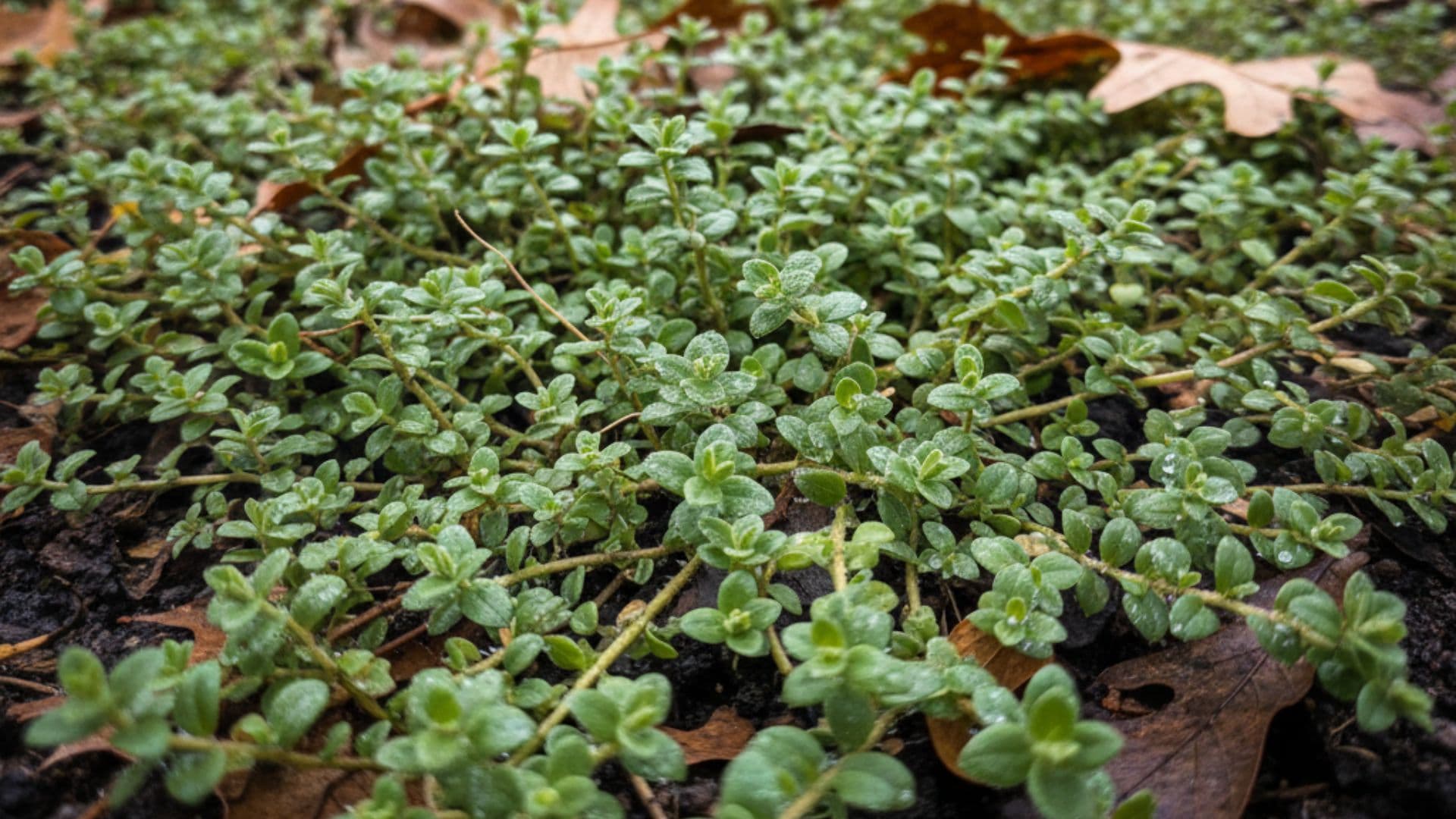
These six common winter weeds show up throughout Central Texas every year, and understanding how to control each one means you can take action right now, before they set seed and create problems all spring long. Professional weed control services combined with your own awareness is the most effective approach to stopping them.
1. Chickweed
Chickweed is probably the most recognizable winter weed in Texas lawns. You'll see fuzzy, hairy stems and small oval leaves forming dense mats, especially in shaded or moist areas.
Why it shows up. Chickweed loves cool, moist conditions. December and January provide exactly what it needs. It grows rapidly and crowds out grass, filling bare spots fast.
How to control it. Hand-pulling works for isolated patches if you get the entire root system out. For larger infestations, a post-emergent herbicide labeled for chickweed works best. Pre-emergent application in fall prevents new germination. Improving lawn drainage in wet areas discourages its return.
2. Clover
Those three-leafed clusters spreading across your lawn are clover. It's actually a legume, not a grass, so it stands out visually and grows differently than your turf.
Why it shows up. Clover fixes nitrogen from the air, so it thrives in nutrient-poor soil where grass struggles. Winter dormancy makes grass weak competitors, so clover takes advantage.
How to control it. Broadleaf herbicides targeting clover are most effective. Improving soil nutrition through lawn fertilization and grass health naturally crowds it out long-term. Hand-pulling individual plants works for small patches if you remove the entire taproot. Consistent lawn care prevents it from coming back.
3. Henbit
Henbit is an underrated winter weed that gets missed because homeowners don't always recognize it. Look for small, reddish-tinged leaves arranged on upright stems, often with a slightly hairy texture.
Why it shows up. It germinates in fall and grows vigorously through winter. It flowers early, sometimes by late January, and once it flowers, you've lost control of seed spread for the season.
How to control it. Early detection is critical. Once you spot henbit, post-emergent herbicide application is urgent. Don't wait. Pre-emergent in fall is the best prevention. This weed responds well to professional herbicide application timed correctly.
4. Bittercress
Bittercress is small and easy to overlook until you realize it's everywhere. It forms delicate rosettes close to the ground with small, lobed leaves.
Why it shows up. It germinates in fall, grows through winter, and flowers by early spring. Even a few plants produce thousands of seeds.
How to control it. Hand-pull when soil is moist. It comes up easier than most winter weeds. For established patches, post-emergent broadleaf herbicide works well. Prevention through pre-emergent application is most effective. Don't let it flower. Once you see flower buds, seeds will follow quickly.
5. Dandelion
Dandelions in winter are more aggressive in cooler months than many homeowners realize. The yellow flowers might look harmless, but each one produces hundreds of seeds.
Why it shows up. Dandelions have deep taproots that survive dormancy and emerge strong in cool weather. They're incredibly hardy and persistent.
How to control it. Hand-pulling requires getting the entire taproot deep into the soil, which is nearly impossible for mature plants. Herbicide application is more reliable. Post-emergent products work, but timing matters. Younger plants are easier to control than established ones. Professional treatment prevents regrowth.
6. Speedwell
Speedwell is a creeping winter weed with small, oval leaves and delicate blue or pink flowers. It spreads horizontally along the ground and easily roots at stem nodes.
Why it shows up. It's incredibly adaptable and spreads both by seed and by stem fragments. Cool weather and moisture trigger aggressive growth.
How to control it. Hand-pulling captures some growth but rarely eliminates the entire plant because fragments reroot. Post-emergent herbicide is most effective, especially on young plants. Once established, speedwell requires persistent management. Professional weed control prevents it from becoming a permanent lawn problem.
Why Now Matters
Here's what matters most: every one of these winter weeds is actively flowering or preparing to flower right now. That means seeds, thousands of them. If you see winter weeds in December and wait until spring to address them, you're not just dealing with current plants. You're dealing with an entire generation of new germination all season long.
The control window is now. December and January are your best chance for effective treatment and before seed set becomes your problem for months ahead. Reading about winter lawn preparation tips and understanding the broader context of seasonal care can help you avoid these issues next year.
DIY Versus Professional Help
Can you handle winter weeds yourself? Sometimes. For isolated plants or small patches, hand-pulling or over-the-counter herbicides might work. But homeowners often discover that treating one area doesn't prevent new growth, timing applications wrong reduces effectiveness, and products chosen incorrectly can damage your dormant grass. If you have pets, it's especially important to use safe treatment methods. Learn more about safe weed control approaches that protect your pets .
Professional weed control addresses multiple factors at once. It identifies what you're actually dealing with, applies the right products at the right time, and follows up strategically. It's not just about killing current weeds. It's about preventing the next generation from taking over.
What Happens If You Wait
Winter weeds don't just hurt your lawn's appearance now. They set the tone for your entire spring and summer. A lawn that's clear of winter weeds in early spring wakes up stronger, grows thicker, and resists heat stress better. A lawn that's been battling winter weed pressure all season is compromised before the real growing season even starts.
The homeowners in Georgetown, Liberty Hill, and Leander who stay ahead of lawn care handle winter weeds right now, not later. Taking fall lawn care seriously the previous season prevents many winter weed problems. It's the difference between a lawn that thrives and one that struggles all year.
If you're looking at your yard and seeing any of these six common winter weeds, it's time to act. Contact Green Dream Lawns to schedule a weed evaluation and control plan. We'll identify exactly what's growing in your yard and create a treatment strategy that works. Call 737.343.8545 or learn more about our approach and expertise by visiting our team page. You can also check out reviews from local homeowners to learn more about their experience.
Frequently Asked Questions
What are the most common winter weeds in Central Texas lawns?
The most common winter weeds in Central Texas include chickweed, clover, henbit, bittercress, dandelion, and speedwell. Chickweed often shows up as fuzzy mats in damp areas, while clover forms small three leaf clusters. These weeds thrive in cool weather and spread quickly when turfgrass is dormant, allowing them to establish and set seed before spring.
Why are winter weeds worse in December and January?
Winter weeds germinate in fall and peak during December and January when warm season grass is dormant. Unlike summer weeds that struggle in heat, winter weeds actively grow during cold months. They are preparing to flower and produce thousands of seeds, which means waiting until spring allows new weeds to keep emerging all season long.
Can I just pull winter weeds out by hand?
Hand pulling can work for isolated weeds if the entire root system is removed. However, many winter weeds, like dandelions, have deep taproots that often break during pulling and grow back. For widespread weed problems, professional treatment is more effective and helps stop future germination.
When should I treat winter weeds in Central Texas?
December and January are the best months to treat winter weeds in Central Texas. Early treatment prevents weeds from setting seed before spring. Post emergent treatments control existing weeds, while pre emergent applications help stop new ones from sprouting. Waiting until spring makes control harder and more costly.
What happens if I don't control winter weeds before spring?
If winter weeds are left untreated, they will set seed by early spring and create heavy weed pressure throughout the growing season. Your lawn will struggle to fill in because it is competing with established weeds. This weakens the turf heading into summer heat, increasing the risk of stress, thinning, and disease.
Need Help With This Service?
Request a quote and we will build a practical lawn plan for your property.
Book Consultation