
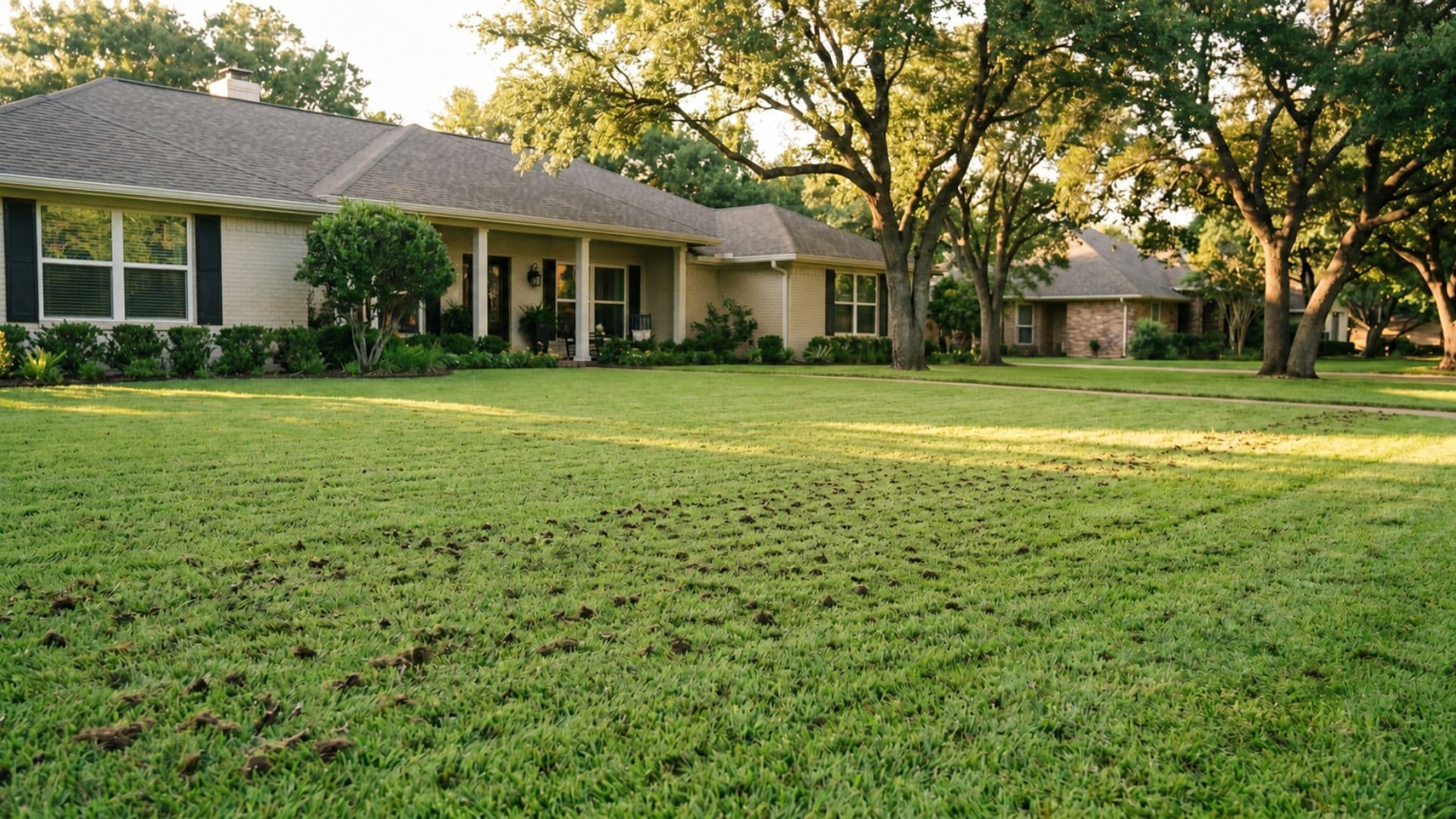
The Soil Underneath Florence Yards
Florence sits in the transition zone between the Blackland Prairie to the east and the Edwards Plateau to the west. That geography gives local soils a particular character. The dominant soil series in this part of Williamson County tends toward heavy clay content, with some areas showing the dark, sticky Vertisol profiles that are common throughout the Blackland Prairie region. These soils are highly productive in agricultural settings, which is part of why this part of Central Texas was farmed so extensively. But under a residential lawn, those same properties become a liability.
Vertisol and clay-dominant soils shrink and swell with moisture changes . When dry, they pull apart and form surface cracks. When wet, they expand and seal off. Either way, the pore space that grass roots need for oxygen exchange and water infiltration gets compromised. Thatch buildup compounds this over time. Bermuda and St. Augustine, the two most common turf grasses in Florence yards, both produce moderate to heavy thatch layers if not managed, and that layer adds another barrier between your irrigation or rainfall and the soil below.
Why Lawn Aeration Florence TX Matters More Here Than in Other Climates
In regions with sandy or loam-dominant soils, compaction is a slower problem. Those soil types drain naturally and maintain better pore structure even under foot traffic and equipment weight. In Florence, compaction happens faster and runs deeper. A yard that sees regular mowing, kids playing, or even just the weight of clay particles settling over a dry summer can reach compaction levels that visibly stress turf within a single season.
Core aeration, which physically removes small plugs of soil from the lawn, addresses this directly. It reopens pore channels, allows oxygen back into the root zone, and creates pathways for water and fertilizer to reach the depth where roots actually grow. Liquid aeration works differently, using soil-penetrating compounds to break surface tension and improve infiltration without removing plugs, and it can be a useful complement on lawns where core aeration alone is not enough or where soil biology needs additional support.
The timing of aeration in this region also matters more than most homeowners realize. For warm-season grasses like Bermuda , the window from late April through early June is ideal. The grass is actively growing, which means it recovers from the mechanical disruption quickly and can take immediate advantage of the improved soil structure. Aerating too early, before soil temperatures are consistently warm, or too late in the season when summer stress is already setting in, reduces the benefit significantly. If you are building a complete spring lawn plan, the spring lawn prep guide we put together covers how aeration fits alongside other April and May tasks.
Rainfall, Drought, and What Florence Lawns Actually Experience
Florence averages roughly 32 to 35 inches of rainfall per year, but that number is misleading if you take it at face value. The distribution is uneven. Spring tends to bring heavier events, sometimes intense enough to cause runoff before the soil can absorb much of anything. Summer shifts into dry stretches that can last weeks. This feast-and-famine pattern is hard on turf, and it is especially hard on compacted turf.
When the soil surface is sealed, heavy spring rains run off rather than infiltrate. When drought follows, the soil contracts and the root zone dries out faster than it should. Aeration breaks that cycle by improving the soil's capacity to capture water when it arrives and hold it longer when it does not. Homeowners who have struggled to understand why their lawn looks stressed despite regular watering often find that compaction is the missing variable. A lawn that cannot absorb water efficiently will show drought stress even on an irrigation schedule that should be adequate. This connects directly to the browning and straw-colored appearance that is common on Florence properties in July and August, something we have written about in more detail here .
Connecting Aeration to the Rest of Your Lawn Care Approach
Aeration does not work in isolation. The reason we treat it as a foundational step is that it directly improves the effectiveness of everything applied afterward. Fertilizer applied to a compacted lawn sits near the surface, where it is vulnerable to volatilization and runoff. The same application on an aerated lawn moves into the root zone where it can actually be used. The same principle applies to overseeding, top dressing, and weed control treatments. If you are investing in those services, the soil needs to be in a condition to receive them. A good overview of how these pieces fit together is available in our Central Texas lawn care checklist .
For Florence homeowners, the practical takeaway is straightforward. The soil here is not forgiving. It compacts readily, resists water when dry, and limits root development in ways that are not always visible until the lawn is already under stress. Scheduling lawn aeration in Florence, TX in late April or May, before the heat of summer arrives, gives warm-season turf the best possible foundation for the months ahead.
Florence Lawn Aeration FAQs
When is the best time to aerate a lawn in Florence, TX?
Late April through early June is usually the strongest window for Bermuda and other warm-season lawns because the grass is actively growing and can recover quickly.
Is core aeration or liquid aeration better for clay soil?
Core aeration is the direct fix for heavy compaction because it physically removes plugs from the lawn. Liquid aeration can help improve infiltration and may be used as a complement, especially when the lawn needs ongoing soil support.
Will aeration help fertilizer work better?
Yes. Aeration creates pathways that help fertilizer, water, and oxygen move into the root zone instead of sitting near the surface or running off during heavy rain.
If your Florence lawn is hard, thin, or slow to respond after watering and fertilization, Green Dream Lawns can help you decide whether core aeration, liquid aeration, or a full lawn care plan makes the most sense. Reach out to our team and we will walk through the options for your property.
Need Help With This Service?
Request a quote and we will build a practical lawn plan for your property.
Book Consultation