
Good lawn and pest decisions should be grounded in practical science, including EPA integrated pest management principles and local extension guidance such as the University of Georgia Extension publications library .
What Lawn Aeration Actually Does to Your Soil
Aeration is the process of mechanically removing small plugs of soil from your lawn to reduce compaction and open channels for air, water, and nutrients to reach the root zone. The plugs pulled from the ground are typically about three inches deep and three-quarters of an inch in diameter, and they are left on the surface to break down naturally over one to two weeks.
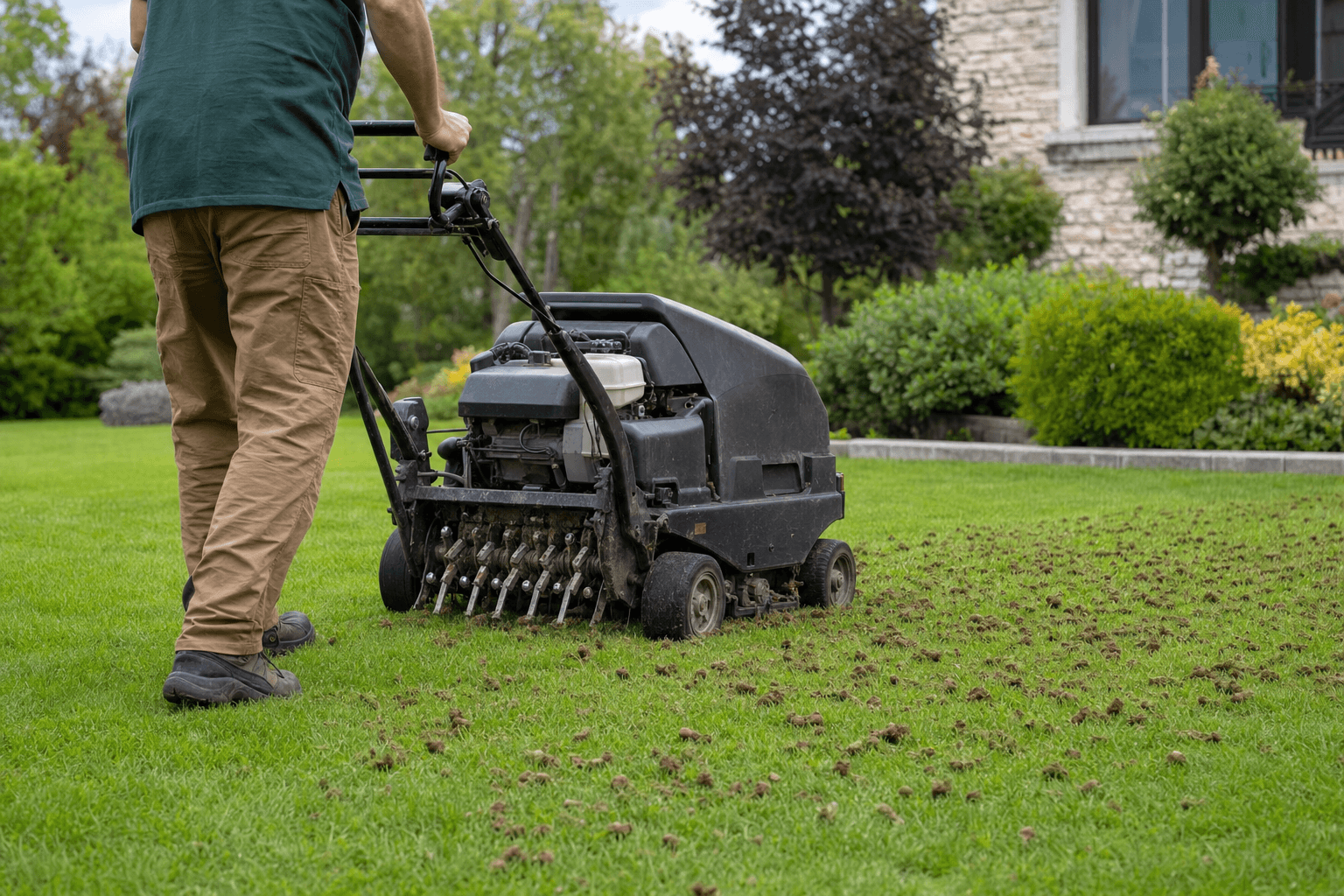
The equipment we use for most residential properties is a core aerator, sometimes called a plug aerator. It uses hollow tines mounted on a drum to extract those plugs as the machine moves across the lawn. This is meaningfully different from spike aeration, which simply punctures the soil without removing material. Spike aeration can actually increase compaction around the hole over time by compressing the surrounding soil. Core aeration removes material, which is why it produces lasting results rather than temporary ones.
The holes left behind serve multiple functions simultaneously. They allow irrigation and rainfall to penetrate rather than run off the surface. They give root systems room to expand laterally. And they create the physical space needed for fertilizer and topdressing materials to make direct contact with the soil profile rather than sitting on top of a thatch layer.
Why Lawn Aeration Georgetown TX Requires a Different Approach Than Other Regions
Georgetown sits on and around the Blackland Prairie, a geological region defined by expansive clay soils that shrink and crack in dry conditions and swell significantly when wet. If you have noticed large cracks forming in your lawn during summer drought, that is your soil telling you it has lost moisture and contracted. That same clay composition means your soil compacts under foot traffic and mowing equipment far more aggressively than sandy or loam-based soils do.
Neighborhoods like Berry Creek, Teravista, and the older established areas near the Georgetown Square tend to have lawns that have been mowed and irrigated for decades on top of this clay base. Over time, a dense thatch layer builds up between the grass blades and the soil surface, and the clay underneath becomes increasingly impermeable. Water pools, roots stay shallow, and the lawn struggles through summer stress even with regular irrigation.
Our team also sees a consistent pattern in newer construction areas around Georgetown. Builders grade lots and lay sod after compacting the soil significantly with heavy equipment before the grass ever goes down. Lawns in these areas frequently need aeration earlier in their life cycle than homeowners expect, sometimes within the first two years after installation.
For more on how Central Texas soil chemistry affects what your lawn needs, our post on lawn fertilization in Central Texas covers the nutrient side of that same equation.
When to Schedule Aeration and What the Process Looks Like
Timing is the variable that determines whether aeration produces visible improvement or gets absorbed without effect. For warm-season grasses like Bermuda and St. Augustine, which make up the majority of lawns we service in Georgetown, the correct window is late spring through early summer, once the grass has fully broken dormancy and is actively growing. That puts us squarely in the right period right now in May 2026. Aerating during active growth means the grass can recover quickly and fill in the holes before the heat of July and August arrives.
Fall aeration is sometimes appropriate for cool-season overseeding programs, but for a standard Bermuda lawn in Georgetown, aerating in October or November while the grass is going dormant produces minimal benefit and can stress the turf heading into winter.
On the day of service, we flag irrigation heads and any buried utility lines before the machine runs. The aerator makes multiple passes across the lawn, typically in two directions to ensure adequate plug density, aiming for holes spaced roughly three to four inches apart. The entire process for an average residential lot takes between 45 minutes and two hours depending on size and layout. We leave the plugs on the surface rather than removing them. They contain beneficial microorganisms and organic matter that break back into the soil within a couple of weeks, especially with regular watering.
How to Know If Your Georgetown Lawn Actually Needs Aeration
The most reliable field test is the screwdriver method. Push a standard screwdriver into moist soil. If it penetrates six inches without significant resistance, your compaction level is manageable. If it stops at two or three inches, your lawn is compacted enough that water and nutrients are not reaching the root zone effectively.
Other indicators include water puddling or running off the surface shortly after irrigation begins, a spongy thatch layer thicker than half an inch, and grass that looks stressed or thin despite adequate watering and fertilization. If your lawn has gone three or more years without aeration, that alone is a reasonable basis for scheduling service regardless of visible symptoms.
Lawn aeration Georgetown TX pairs well with topdressing and fertilization when done in the right sequence. Aerating first, then applying a thin layer of compost or topdressing material, allows that material to settle directly into the holes and begin improving soil structure from the inside out rather than sitting on the surface. Our team typically recommends a fertilization application within two to three weeks after aeration while the root zone is most receptive. Homeowners who schedule lawn aeration Georgetown TX as part of a broader spring maintenance plan consistently see stronger turf performance through the summer months compared to those who address compaction and nutrition separately.
If you want to understand how aeration fits into a broader seasonal maintenance plan, our Central Texas lawn care checklist lays out the full picture. And if you are ready to talk through what your specific lawn needs this season, you can reach us directly at greendreamlawns.com/contact .
For Georgetown lawns on clay soil, the window between now and mid-June is the most productive time of year to aerate. After that, summer heat slows recovery and reduces the benefit of the process considerably.
Need Help With This Service?
Request a quote and we will build a practical lawn plan for your property.
Book Consultation