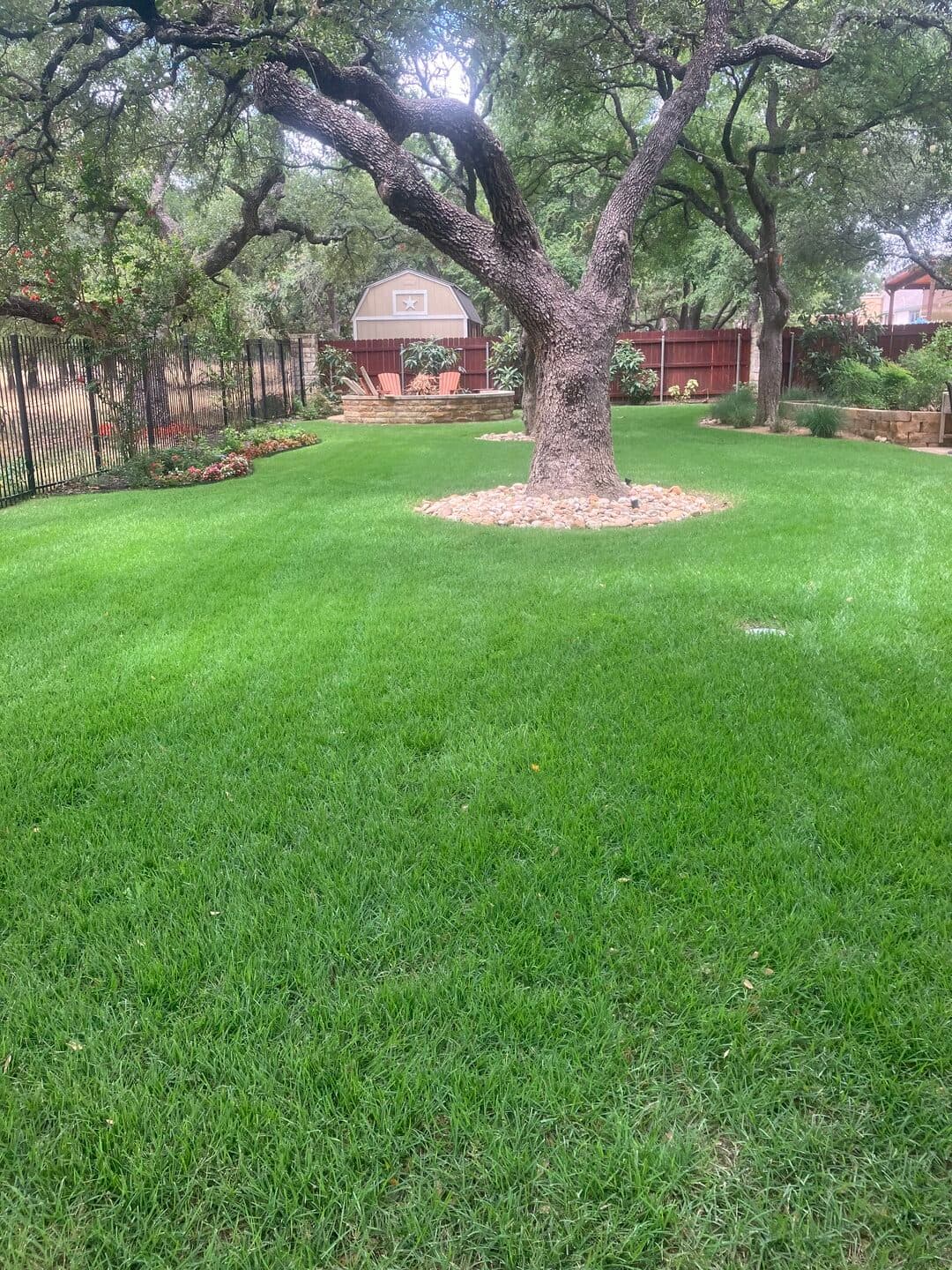
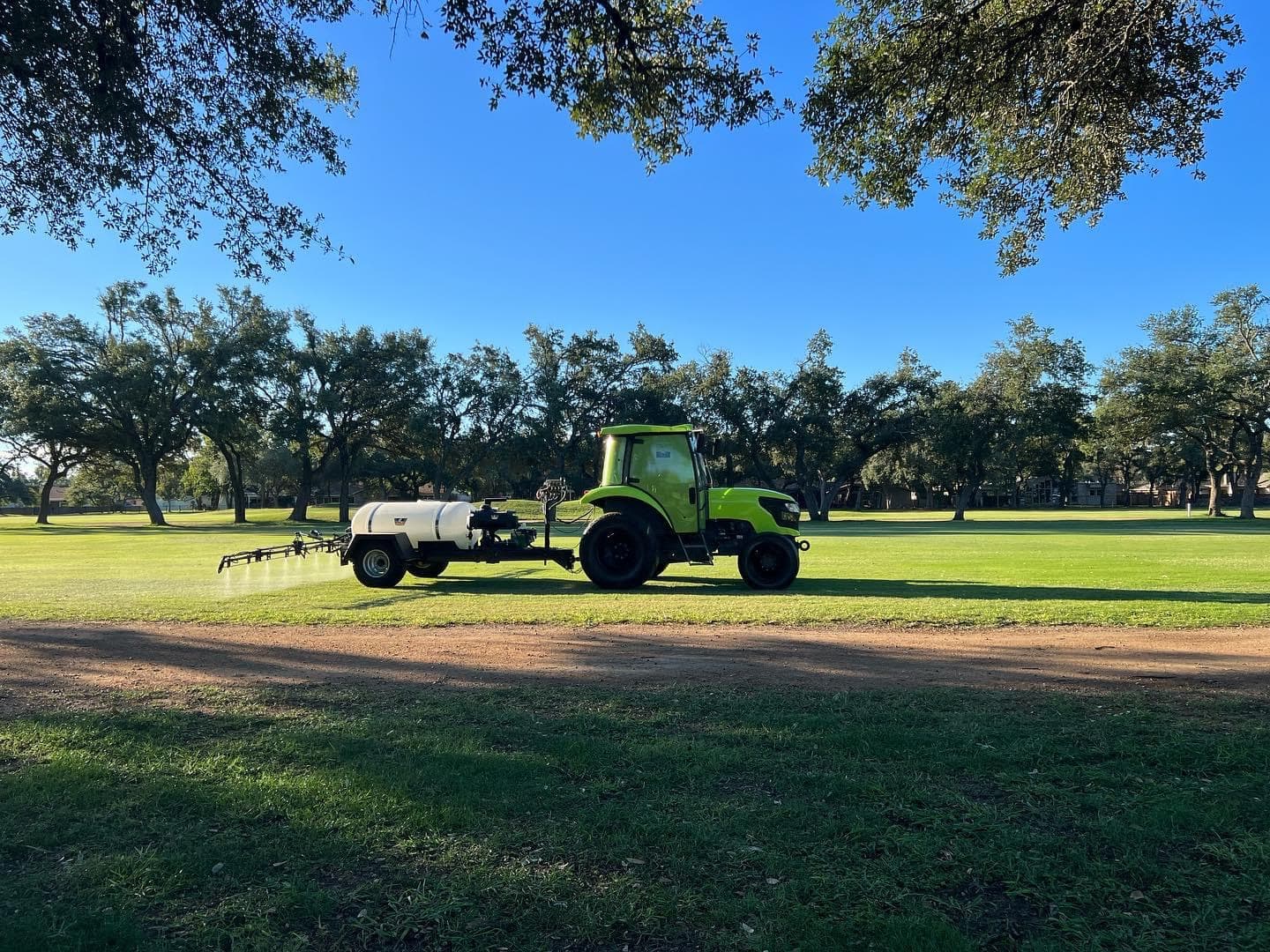
The best time for lawn overseeding in Leander, TX is early to mid-September, once nighttime temperatures consistently drop below 75 degrees Fahrenheit. Ryegrass seed germinates in 7 to 10 days under those conditions and establishes before the first frost. Homeowners who wait until October typically see thinner, weaker coverage that struggles through winter.
Key Takeaways
- Leander's soil transitions from thin Hill Country limestone to heavier Blackland clay within just a few miles, and that shift directly affects seed-to-soil contact and germination rates.
- The ideal overseeding window in Central Texas runs from early September through mid-October, well before the first frost typically arrives in late November.
- Aeration before overseeding is not optional in compacted clay soils. It is the difference between seed that germinates and seed that washes away.
- Warm-season turf like Bermuda and St. Augustine requires different overseeding strategies, and choosing the wrong cool-season grass variety for your base turf can create spring transition problems.
- Weed pressure from winter annuals like annual bluegrass competes directly with overseeded ryegrass, making pre-overseeding weed management a critical step.
Why Leander's Soil Makes Overseeding More Complicated Than It Looks
Leander sits in a zone that soil scientists sometimes call the "contact zone" between two distinct geological formations. On the western edge of the city, near the older neighborhoods along FM 2243, you encounter shallow soils over Austin Chalk and Edwards Limestone. These soils drain quickly, sometimes too quickly, and they heat up fast in summer. Move east toward the newer developments near Ronald Reagan Boulevard and Crystal Falls Parkway, and the soil profile shifts toward the deep, shrink-swell clays of the Taylor and Houston series. These clays hold moisture but compact aggressively under foot traffic and irrigation cycles.
Both soil types create challenges for overseeding, but in opposite ways. The rocky, shallow soils on the west side of Leander struggle to hold seed in place during rainfall events, and the limited organic layer means germinating seedlings have a short window before moisture stress sets in. The dense eastern clays, on the other hand, form a surface crust after rain that physically prevents seed from making adequate contact with the soil below.
This is exactly why core aeration before overseeding matters so much in this area. Pulling plugs from compacted clay creates the micro-pockets where seed settles, stays moist, and makes direct contact with loosened soil. Our blog post on core aeration in Leander goes into more detail about timing that process, and the same logic applies directly to overseeding preparation.
Pairing aeration with topdressing adds another layer of benefit. A thin application of compost over the seeded surface helps regulate soil temperature, retain moisture during the critical germination window, and improve the organic content that both soil types in Leander genuinely lack.
What Is the Right Grass Seed for Lawn Overseeding in Leander, TX?
Most Leander lawns are planted in Bermudagrass, which dominates the warm-season turf market across Williamson County. A smaller percentage of properties, particularly those with more shade from live oaks, carry St. Augustine. Both go dormant in winter, turning tan and straw-colored by December, which is why many homeowners pursue lawn overseeding leander, tx with a cool-season grass to maintain green color through the colder months.
Annual ryegrass is the most common choice, and it works well in this climate because it germinates quickly, handles the mild Central Texas winters without much stress, and dies back naturally in spring as soil temperatures climb above 50 degrees. Perennial ryegrass is finer-textured and more visually appealing, but it transitions out of Bermuda more slowly in spring, which can suppress the warm-season turf during its critical green-up period.
One detail that catches homeowners off guard: overseeding St. Augustine is generally not recommended. St. Augustine spreads by stolons rather than seed, and the seed available commercially is both expensive and unreliable in germination. If a St. Augustine lawn has thin or bare patches, disease diagnosis and plugging are usually more effective than seeding. Our team looks at the base turf before recommending any overseeding approach, because the wrong seed choice creates more problems than it solves.
How Central Texas Weather Patterns Shape the Fall Overseeding Window
July in Central Texas is not the time to overseed, but it is exactly the right time to plan. Soil temperatures in Leander and across the Cedar Park corridor typically stay above 80 degrees Fahrenheit through September, and ryegrass seed will not germinate reliably until that number drops. The practical target window runs from roughly September 10 through October 15, though that shifts slightly depending on how late summer heat lingers in any given year.
Central Texas also sits in USDA Hardiness Zone 8b, which means hard freezes are possible but not guaranteed every winter. This matters for overseeded ryegrass because a severe early freeze in November can damage seedlings that went in too late. Homeowners who book overseeding in August for September execution consistently see better results than those who wait until the weather already feels cool.
Rainfall patterns add another variable. The region receives most of its fall precipitation in October and November, which can help or hurt depending on timing. A heavy rain event shortly after seeding on a compacted or unconditioned surface will move seed around and create uneven germination. That is another reason pre-seeding soil preparation, including addressing any weed pressure and compaction, changes the outcome significantly.
Winter annual weeds like annual bluegrass (Poa annua) and henbit germinate in the same fall window as overseeded ryegrass. If a lawn carries heavy weed seed pressure from prior seasons, those weeds will compete aggressively with new grass seed. Getting ahead of that competition is part of what makes a structured lawn care plan more effective than individual one-off treatments.
What Happens Before and After Overseeding That Most Homeowners Miss
Lawn overseeding leander, tx is rarely the only step that matters. The preparation work and the follow-through after germination both determine whether a homeowner gets a uniform green lawn or a patchy result that fades by January.
Before seeding, the warm-season turf should be mowed short, typically to about one inch, to reduce the canopy competition that would otherwise shade out new seedlings. Any existing thatch layer needs evaluation. Heavy thatch in Bermuda lawns acts as a physical barrier between seed and soil. Starter fertilization applied at seeding supports early root development, and the phosphorus component is particularly important in the alkaline soils common across this part of Williamson County.
After germination, the newly established ryegrass needs consistent moisture for the first three to four weeks. Irrigation frequency drops as roots deepen, but the first mowing should not happen until the new grass reaches three inches. Cutting too early pulls seedlings from soil that has not yet developed a strong root anchor.
For properties that experienced grub activity earlier in the season, overseeding into damaged turf without addressing the underlying insect pressure is a temporary fix at best. The same applies to lawns that showed fungal disease symptoms during summer. Our lawn disease services and grub control address those root causes before new seed goes down.
If you are planning ahead for fall, the practical decision point is now. Scheduling soil preparation, aeration, and overseeding in advance means your lawn is not waiting on a backlog when the September window opens. Reach out to our team to talk through what your specific property in Leander, Georgetown, or the surrounding area actually needs before that window arrives.
Frequently Asked Questions
When should I schedule lawn overseeding in Leander, TX?
The target window for lawn overseeding in Leander, TX is early to mid-September, once soil temperatures begin dropping below 75 degrees Fahrenheit at night. Booking in advance, ideally in July or August, ensures your lawn is prepared and scheduled before demand peaks. Waiting until October reduces germination time before the first frost and typically produces thinner results.
Does the type of soil in Leander affect how overseeding works?
Yes, significantly. Western Leander has shallow, rocky soils over limestone that drain quickly and offer limited organic matter for seedling establishment. Eastern Leander has heavier clay soils that compact and crust over, preventing good seed-to-soil contact. Both conditions benefit from core aeration before overseeding, though the specific approach our team takes varies based on which soil type a property sits on.
Can I overseed a St. Augustine lawn in Leander?
Overseeding St. Augustine with cool-season grass is generally not recommended and rarely produces the results homeowners expect. St. Augustine does not spread by seed the way Bermuda does, and the seed available commercially has poor germination rates. Thin or bare patches in St. Augustine are better addressed through disease treatment, plugging, or identifying the underlying cause of turf loss.
What should I do to my lawn before overseeding in the fall?
Preparation matters as much as the seeding itself. Mow your warm-season turf short, address any thatch buildup, and schedule core aeration to improve seed-to-soil contact. A starter fertilizer applied at seeding supports early root development, particularly in the alkaline soils common across Williamson County. Weed pressure from winter annuals should also be evaluated before seed goes down, since those weeds germinate in the same fall window as ryegrass.
Need Help With This Service?
Request a quote and we will build a practical lawn plan for your property.
Book Consultation