
Right now is your window. It's that brief, often-overlooked period when you can get ahead of problems before they start, strengthen your soil while it's still workable, and set the stage for the kind of spring green-up that turns heads. Miss it, and you're playing catch-up all season. Nail it, and you'll spend April enjoying your lawn instead of scrambling to fix it.
We've helped homeowners across Georgetown, Leander, and Liberty Hill get this timing right, and we've seen firsthand what a difference these early steps make. Here's what you need to know about spring lawn prep Georgetown residents can start right now, and why waiting until March might already be too late.
Why February Matters More Than You Think
Central Texas doesn't follow the same lawn care calendar as the rest of the country, and that's exactly where homeowners get tripped up. While folks up north are still buried in snow, our soil temperatures are already creeping into the low 50s. That matters because it's the trigger point for both turf growth and weed germination.
St. Augustine, the most common grass in our area, starts to wake up when soil temps consistently hit 55-60°F. But here's the catch: many common weeds, especially those winter annuals like henbit and chickweed, are already active. They're putting down roots right now, gearing up to explode when March warmth arrives. If you wait until you see them popping up, you've already lost the advantage.
February is also ideal for soil work. The ground is typically moist but not waterlogged, making it easier to aerate, amend, or address compaction issues without causing damage. Once spring rains start and temps climb, your lawn shifts into active growth mode, and aggressive interventions become riskier.
The homeowners who reach out about lawn care Leander services in February understand this. They're not worried about keeping up appearances. They're thinking strategically about the foundation their lawn will stand on for the entire growing season.
Start with a Honest Assessment
Before you do anything else, take a real look at your lawn. Walk it systematically, checking for:
- Thin or bare patches where grass didn't recover from summer stress
- Low spots that collect water and stay soggy
- Compacted areas near sidewalks, driveways, or high-traffic zones
- Thatch buildup that feels spongy underfoot
- Existing weeds that made it through the cooler months
This isn't about being critical. It's about knowing what you're working with. Every lawn has weak points, and identifying them now lets you prioritize your efforts. Maybe you've got a drainage issue that needs addressing before you invest in treatments. Maybe that shady corner needs a different approach than the sunny front yard.
For those tackling turf care Liberty Hill properties with challenging soil conditions, this assessment stage is especially important. The rocky, alkaline soil common in our area creates specific challenges that generic advice won't solve.
Soil Work That Makes the Difference
Your grass is only as healthy as the soil it grows in, and February is your best shot at improving what's beneath the surface. Here's what we recommend:
Test Your Soil
You can grab a basic test kit from any garden center, or send a sample to the Texas A&M Soil Testing Lab for a comprehensive analysis. You're looking at three main factors:
- pH levels (St. Augustine prefers slightly acidic to neutral, around 6.0-7.0)
- Nutrient content (nitrogen, phosphorus, potassium)
- Organic matter percentage
Most Central Texas soil leans alkaline and lacks organic matter, which affects nutrient availability even if you're fertilizing regularly.
Address Compaction Early
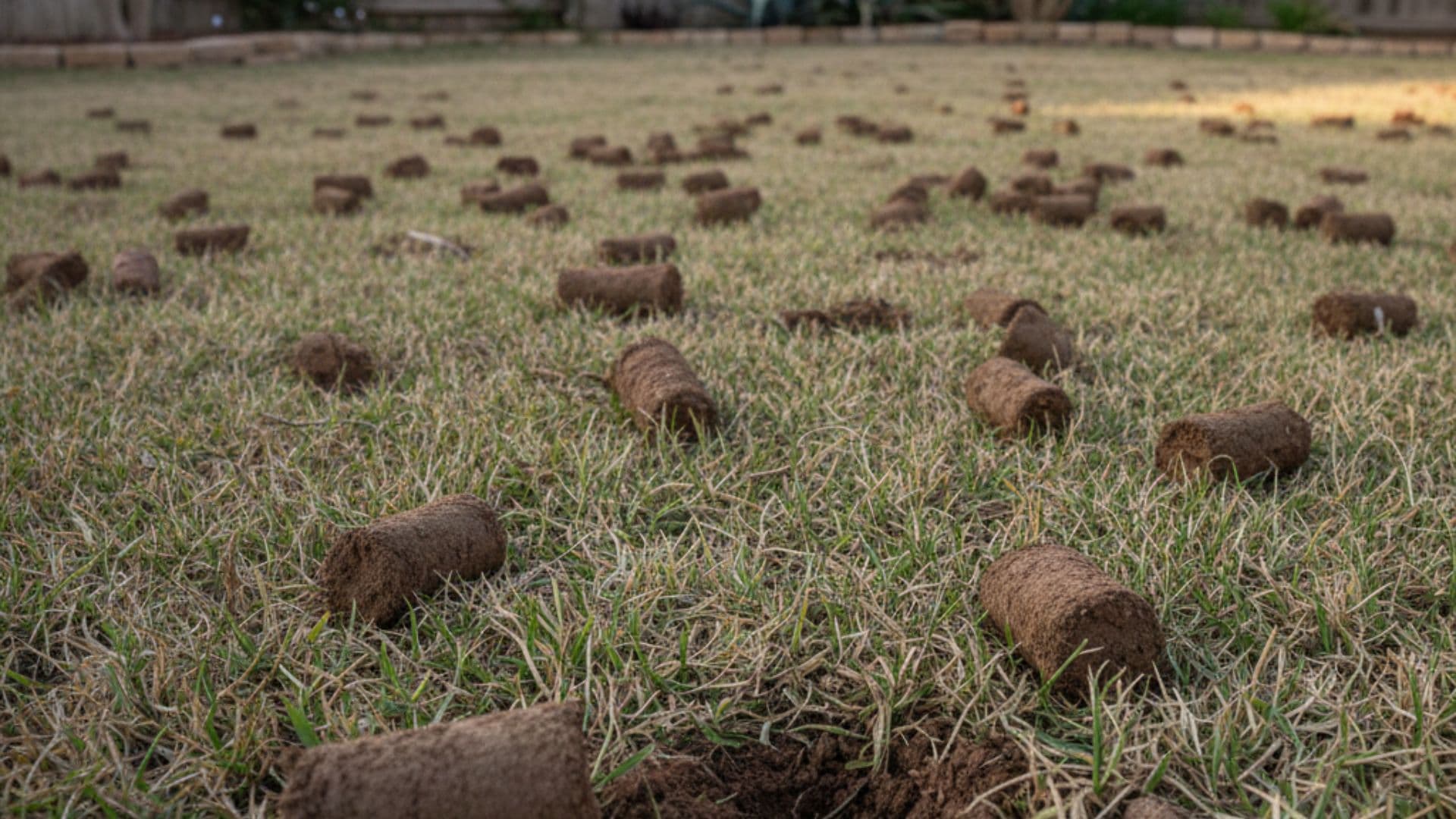
Compacted soil chokes out oxygen, limits root growth, and creates perfect conditions for disease. If your lawn shows compaction signs (poor drainage, hard surface, weak grass in high-traffic areas), consider professional core aeration services before growth kicks in. The plugs you pull out create channels for air, water, and nutrients to penetrate deeper.
Timing matters here. You want soil that's workable but not soggy. Late February often hits that sweet spot in Georgetown and surrounding areas.
Amend Thoughtfully
Depending on your soil test results, you might need to add:
- Compost for organic matter and improved structure
- Sulfur to lower pH if you're running too alkaline
- Gypsum to improve clay soil without altering pH
Don't just throw down amendments randomly. Target the specific issues your soil test revealed, and apply at rates that won't overwhelm your grass as it starts growing. For significant soil improvement needs, topdressing services can help level low spots while adding organic matter throughout your lawn.
Get Ahead of Weeds Before They Crowd In
This is where most homeowners lose the battle before it even starts. By the time you see a lawn full of weeds in April, you're looking at plants that established themselves weeks earlier, probably right around now.
The Pre-Emergent Advantage
Pre-emergent herbicides work by creating a barrier in the soil that prevents weed seeds from germinating. The key is timing: they need to be down before soil temperatures trigger germination, which typically happens when we hit consistent 55-60°F readings.
For common spring weeds like crabgrass, spurge, and goosegrass, that window usually falls in late February through early March. Miss it, and you're stuck with post-emergent treatments all season. Our comprehensive weed control programs are designed around these critical timing windows to keep your lawn weed-free throughout the year.
What About Existing Weeds?
If you're already seeing weeds popping up, spot-treat them now before they set seed. Products containing 2,4-D or dicamba work well on broadleaf weeds, but read labels carefully and avoid application if temperatures will spike above 85°F within a few days. Learn more about identifying and stopping winter weeds common to our region.
We typically recommend a two-pronged approach: handle visible weeds now with targeted post-emergent treatments, then lay down pre-emergent protection for the spring wave that's coming.
Hold Off on the Mower for Now
St. Augustine is still mostly dormant in February. That brown or tan color you're seeing isn't dead grass. It's sleeping grass. Cutting it too short while it's dormant stresses the plant and removes the crown protection it needs as temps fluctuate.
Wait until you see consistent green growth before you fire up the mower. When you do start:
- Raise your blade height to 3-4 inches for the first few cuts
- Never remove more than one-third of the blade length at once
- Keep blades sharp to avoid tearing dormant grass
If your lawn is looking shaggy from last year's growth, a light scalping might be appropriate, but only once you're seeing active green-up. This removes dead material and lets sunlight reach the soil, encouraging faster spring growth. Just don't scalp too early or too aggressively. If you're concerned about brown or straw-colored patches, check out our guide on why lawns turn brown in Central Texas .
Fertilization Timing Matters
One of the biggest mistakes we see is homeowners rushing to fertilize in February. It's tempting (you want that green-up to happen faster), but here's why waiting is smarter:
Fertilizing dormant grass is essentially feeding nothing. The nutrients either wash away, leach into groundwater, or sit on the surface where they can't be used. Worse, early nitrogen application can stimulate soft, weak growth that's vulnerable to late cold snaps. Yes, we can still get freezes in March.
Hold your fertilizer until you see consistent growth and soil temps are reliably above 60°F, usually mid-to-late March in our area. When you do fertilize, use a slow-release formula designed for Texas lawns, and follow label rates carefully. Our professional lawn fertilization services deliver the right nutrients at the right time for optimal spring growth.
Why Professional Timing Makes the Difference
There's a reason local lawn experts in Georgetown keep detailed records of soil temperatures, rainfall patterns, and treatment schedules. Lawn care isn't just about knowing what to do. It's about knowing exactly when to do it, and that timing shifts slightly every year based on weather patterns.
The homeowners who get the best results aren't necessarily doing more work. They're doing the right work at the right time, and they're not wasting money on treatments that won't deliver because the conditions aren't aligned. Our team at Green Dream Lawns has built our reputation on understanding these local conditions and applying treatments when they'll have maximum impact.
Your Spring Action Plan
Here's your practical checklist for the next few weeks:
- Walk your property thoroughly and document problem areas
- Test your soil if you haven't in the past two years
- Plan your pre-emergent application for when soil temps hit 55°F consistently
- Address any drainage or compaction issues while ground is workable
- Spot-treat visible weeds before they spread
- Clean up debris but avoid aggressive raking that damages dormant grass
- Service your equipment so everything's ready when growth starts
The work you put in now, before your lawn demands daily attention, sets the trajectory for the entire season. You're not just preventing problems. You're building the kind of foundation that produces thick, resilient turf capable of handling summer heat, drought stress, and everything else Central Texas throws at it.
Ready to get your lawn set up right from the start? Our team at Green Dream Lawns can handle the timing, the treatments, and the technical details while you focus on enjoying the results. Give us a call at 737-343-8545 or visit greendreamlawns.com to schedule your spring lawn assessment.
When should I start preparing my lawn for spring in Georgetown, TX?
February is the ideal time to start spring lawn preparation in Georgetown. Soil temperatures begin reaching the low 50s, which triggers both turf growth and weed germination. This short window allows you to address compaction, apply pre emergent weed control, and amend soil before active growth begins in March. Our professional lawn care services can help you get the timing right.
Is February too early to fertilize my St. Augustine lawn in Central Texas?
Yes, February is generally too early for fertilization. St. Augustine remains mostly dormant until soil temperatures consistently reach 60°F, typically in mid to late March. Fertilizing dormant grass wastes nutrients through runoff and can encourage weak growth that is vulnerable to late freezes. Wait until you see steady green growth before applying fertilizer. Learn more about proper lawn fertilization timing.
What is the best time to apply pre emergent weed control in the Georgetown area?
Pre emergent herbicides should be applied in late February to early March when soil temperatures consistently hit 55 to 60°F. This prevents spring weeds like crabgrass, spurge, and goosegrass from germinating. Missing this window often means dealing with post emergent treatments throughout the season. Our comprehensive weed control programs are timed for maximum effectiveness.
Should I mow my lawn in February in Central Texas?
Hold off on mowing until you see consistent green growth. St. Augustine is still dormant in February, and that brown color is sleeping grass, not dead grass. Cutting too short while dormant stresses the plant and removes crown protection. Once active growth begins, set your blade height at 3 to 4 inches and never remove more than one third of the blade length.
How can professional lawn care help with spring lawn preparation in Liberty Hill and Leander?
Professional lawn care providers track daily soil temperatures, rainfall patterns, and treatment schedules to ensure applications happen at the right time. This level of timing makes a clear difference in results. Green Dream Lawns adjusts schedules based on real time conditions rather than fixed calendar dates, ensuring treatments like aeration, pre emergent applications, and fertilization deliver strong, healthy growth.
Need Help With This Service?
Request a quote and we will build a practical lawn plan for your property.
Book Consultation