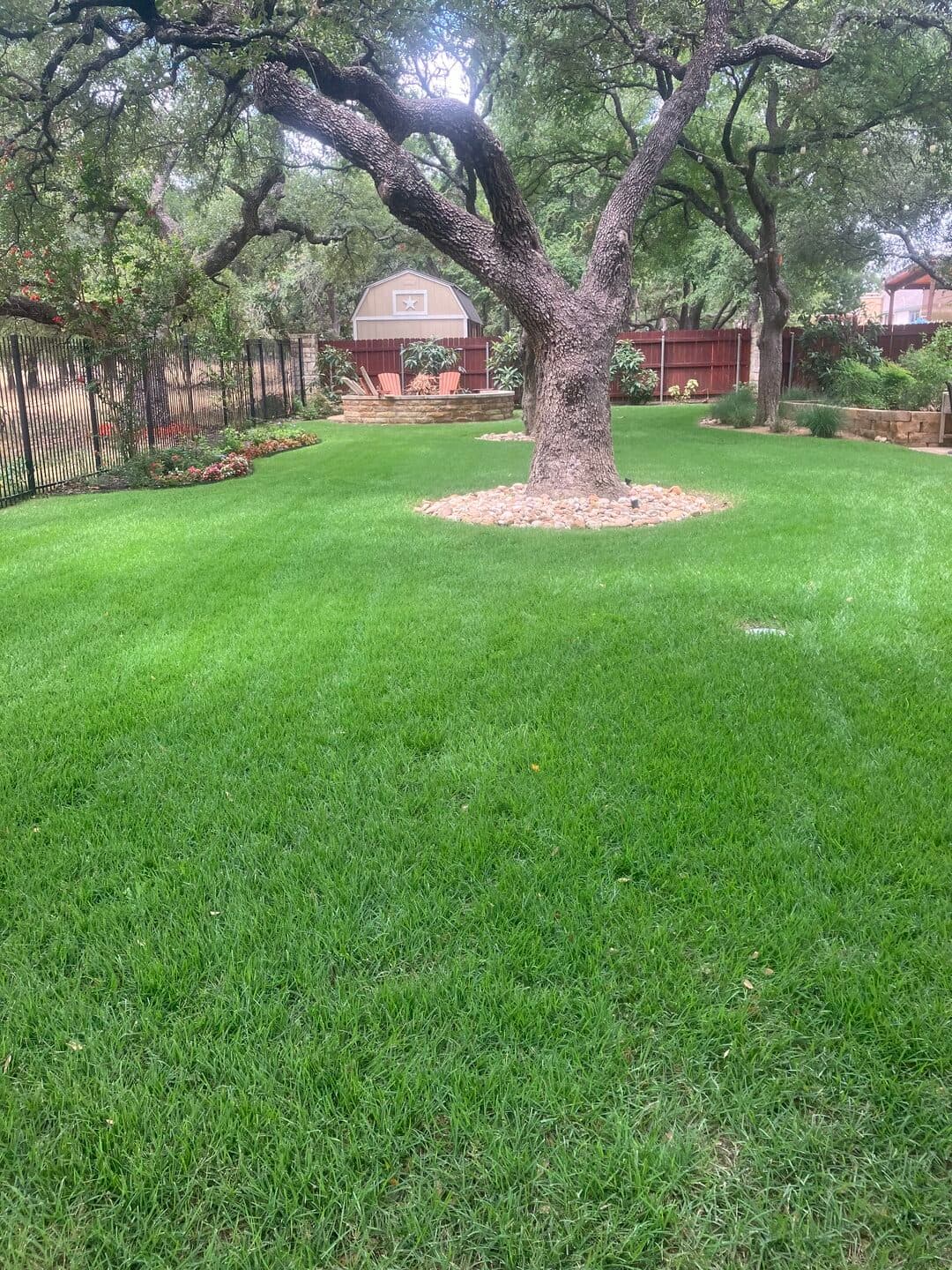
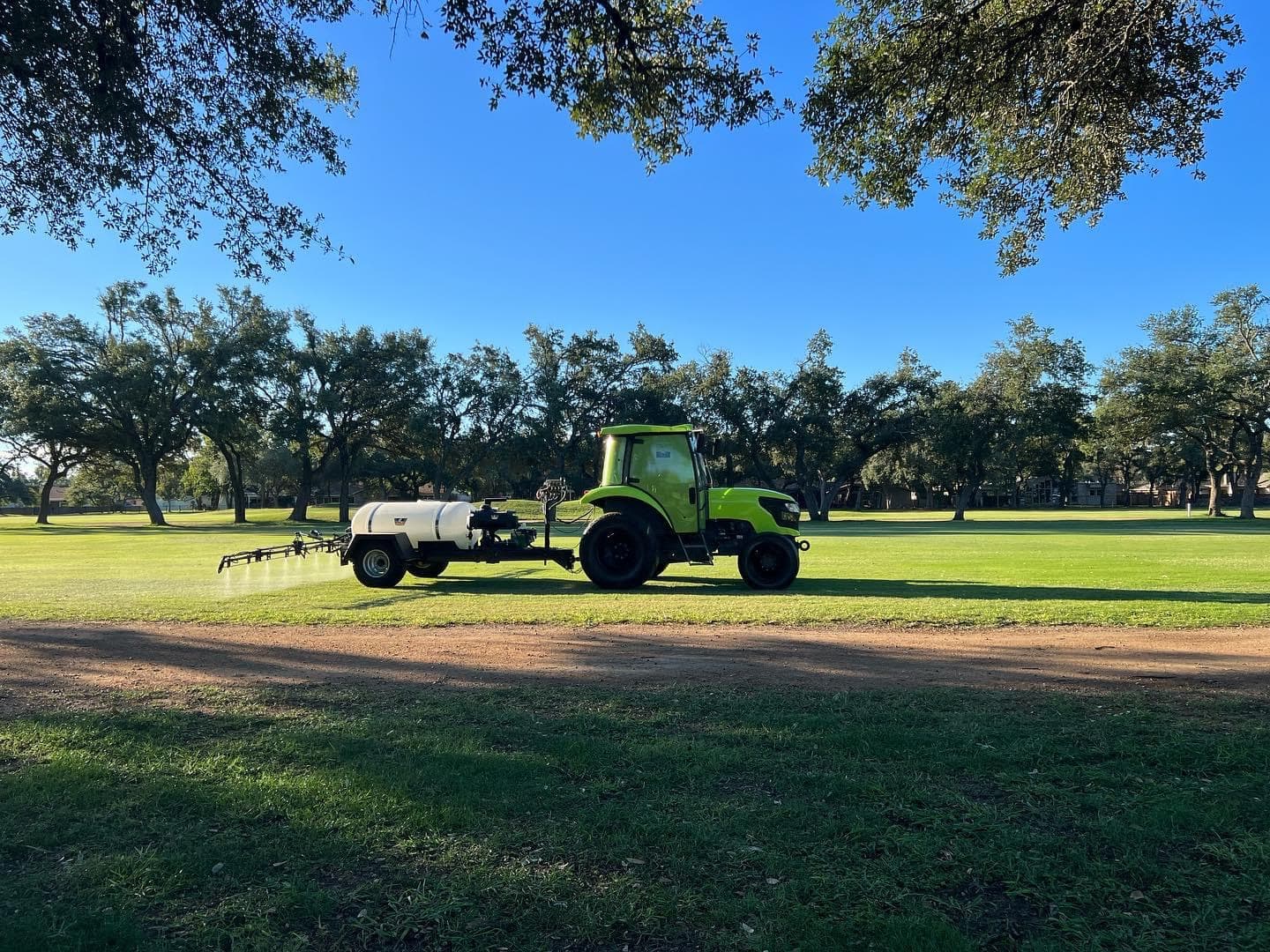
Vegetation control in Round Rock, TX means the targeted suppression or elimination of unwanted brush, invasive grasses, woody plants, and non-selective weeds on properties where standard lawn treatments are not enough. Professional services use selective or non-selective herbicide programs applied by licensed technicians to clear and maintain roadsides, fence lines, commercial edges, vacant lots, and utility corridors.
Key Takeaways
- Round Rock and Georgetown properties face aggressive vegetation growth in July due to heat, rocky soil, and limited turf competition on open ground.
- Vegetation control is a different service category from standard weed control and requires different products and application strategies.
- Common mistakes like mowing brush repeatedly or using retail herbicides on deep-rooted woody plants rarely produce lasting results.
- Professional vegetation control programs target the root system, not just the visible growth above ground.
- Timing and product selection matter significantly in Central Texas, where heat and soil type affect how herbicides move and perform.
What Causes Vegetation to Take Over So Quickly?
The short answer is that Central Texas summers create near-perfect conditions for opportunistic plant species. High heat, periodic rain events, and open disturbed soil are exactly what invasive grasses like Johnson grass and King Ranch bluestem need to establish and spread. Woody species like cedar elm, persimmon, and huisache have deep tap roots that store energy through dry spells, then push new growth aggressively the moment moisture returns.
The soil profile in this corridor between Georgetown and Round Rock makes the problem worse. Shallow topsoil over limestone or caliche means desirable turf struggles to compete, but invasive species evolved for exactly these conditions. When there is no dense, healthy grass canopy shading the soil surface, weed seeds and brush seedlings find open ground and take it. On commercial properties, vacant parcels, and utility easements, that cycle repeats every season without intervention.
Why Is Vegetation Control Round Rock, TX Such a Common Need?
The Brushy Creek corridor, the older commercial zones along SH-195, and the expanding development edges around Round Rock all share one thing: a lot of transitional land that sits between active management and complete neglect. These are the fence lines behind strip centers, the drainage easements behind new subdivisions, the undeveloped parcels waiting on permits. Nobody is actively managing them, and in Central Texas summers, that gap is all invasive vegetation needs.
Development pressure also plays a role. As Round Rock and Georgetown continue to grow, land gets cleared and then sits. Cleared soil with no established plant community is an open invitation. Cedar and native brush species reseed aggressively in disturbed areas, and without a treatment plan in place from the start, property owners often find themselves behind before they realize there is a race happening at all.
This is also why vegetation control round rock, tx is not the same service as routine weed control . The plants involved are tougher, the root systems are deeper, and the scale of the problem is typically larger than what a standard lawn program addresses.
What Mistakes Make Vegetation Problems Worse?
We see a few patterns repeat themselves with property owners who have been trying to manage this on their own before calling us.
The first is repeated mowing. Mowing brush and invasive grasses does not kill them. It stimulates them. Many of the worst offenders, including Johnson grass and cedar, respond to cutting by sending up new shoots faster than before. Mowing is a maintenance tool for turf, not a suppression strategy for established brush.
The second is using retail broadleaf herbicides on plants that require non-selective or woody-stem-specific treatments. Products designed for clover and dandelions in a lawn are not formulated to move through the vascular system of a woody shrub or a deep-rooted invasive grass. You may see temporary top kill and then watch the plant recover from the root within a few weeks.
The third is treating only once. A single application rarely provides season-long control on established vegetation, especially in July when plants are actively growing and metabolizing quickly. Effective programs account for re-treatment timing and monitor for regrowth.
Skipping a treatment plan on a commercial property can also compound costs quickly. What requires two applications in July may require four by September if growth is left unchecked. Our commercial turf and vegetation services are designed around this kind of proactive scheduling.
How Does Professional Vegetation Control Actually Work?
Professional vegetation control round rock, tx starts with identifying what is growing and selecting the right product class for the target species. That distinction matters more than most people realize. Selective herbicides suppress specific plant types without damaging surrounding desirable vegetation. Non-selective treatments are used on areas where total vegetation suppression is the goal, like a gravel lot edge or a utility easement.
Application method also matters. Foliar sprays work well on actively growing annual and perennial species. Basal bark treatments or cut-stump applications are used on woody plants where systemic uptake through the leaves is not reliable. The goal in every case is to get the active ingredient to the root system, not just burn the top growth.
After initial suppression, a maintenance schedule keeps regrowth from re-establishing. This is where the long-term value comes in. A property that has been treated and maintained on a consistent program is significantly easier and less expensive to manage than one that gets treated reactively after brush has fully re-established.
For properties where vegetation control is part of a broader land management picture, it often pairs well with lawn fertilization and overseeding programs that help desirable turf compete and fill in after suppression treatments. A healthy, dense grass stand is one of the best long-term defenses against reinvasion.
When Should You Call a Professional Instead of Handling This Yourself?
If the growth covers more than a small, clearly defined area, if woody plants are involved, if the property is commercial or has any liability exposure, or if you have tried retail products more than once without lasting results, those are the indicators that this has moved past DIY territory. Licensed applicators have access to product formulations and application equipment that retail channels do not carry, and they carry the training to apply them safely near structures, water features, and neighboring properties.
We serve property owners across Round Rock , Georgetown , Cedar Park , Leander , and Liberty Hill . If you are watching your property lose ground to brush and invasive growth this July, the right time to start a treatment program is now, before the fall re-seeding cycle locks in next year's problem. Reach out to our team to talk through what you are seeing and what a realistic program looks like for your specific property.
Frequently Asked Questions
Is vegetation control the same thing as weed control?
They are related but not the same service. Standard weed control targets broadleaf weeds and grassy weeds within an established lawn. Vegetation control addresses a broader category of unwanted plant growth, including woody brush, invasive grasses, and non-selective suppression on areas outside of maintained turf. The products, application methods, and timing are often different.
How long does vegetation control treatment last in the Round Rock area?
Results vary based on the species being treated, the product used, and the time of year. In July, actively growing plants metabolize herbicides quickly, which can mean faster initial results but also faster regrowth from surviving root material. Most effective programs in the Round Rock and Georgetown area include a follow-up application within 30 to 60 days to address regrowth before it re-establishes.
Can vegetation control treatments damage nearby trees or desirable plants?
This depends entirely on product selection and application method. Licensed applicators use selective products where desirable plants are nearby and adjust application techniques to minimize drift or soil uptake by non-target species. If you have established trees on or near the treatment area, mention them when you contact us. Our plant and tree care services can also be coordinated with vegetation suppression programs to protect valuable woody plants on the same property.
Do you handle vegetation control on commercial properties in Round Rock?
Yes. Vegetation control round rock, tx for commercial properties is one of the more common requests we handle, particularly for property managers dealing with fence lines, drainage areas, parking lot edges, and undeveloped portions of larger parcels. Our commercial turf and vegetation services are designed for ongoing maintenance contracts as well as one-time suppression projects.
Need Help With This Service?
Request a quote and we will build a practical lawn plan for your property.
Book Consultation