
Professional vegetation control helps manage invasive growth, protect infrastructure, and reduce long-term maintenance challenges across maintained and non-maintained areas.
Vegetation Control for Non-Maintained Areas
Specialized Applications and Methods for Different Areas
Vegetation control for non-maintained areas focuses on controlling weeds and invasive plants where traditional lawn care is not practical or desired. These areas often include open land, fencelines, fire breaks, pipelines, and right-of-way spaces that are prone to aggressive growth. Integrated Vegetation Management techniques are used to selectively control grassy weeds in established plantings while preserving desirable vegetation. Noxious and poisonous weeds such as Johnsongrass, poison ivy, and field bindweed are addressed to reduce safety risks and prevent spread. Methods such as broadcast applications, spot spraying, and zone spraying allow for precise control based on site conditions and vegetation pressure.
Non-Selective Weed Control Applications
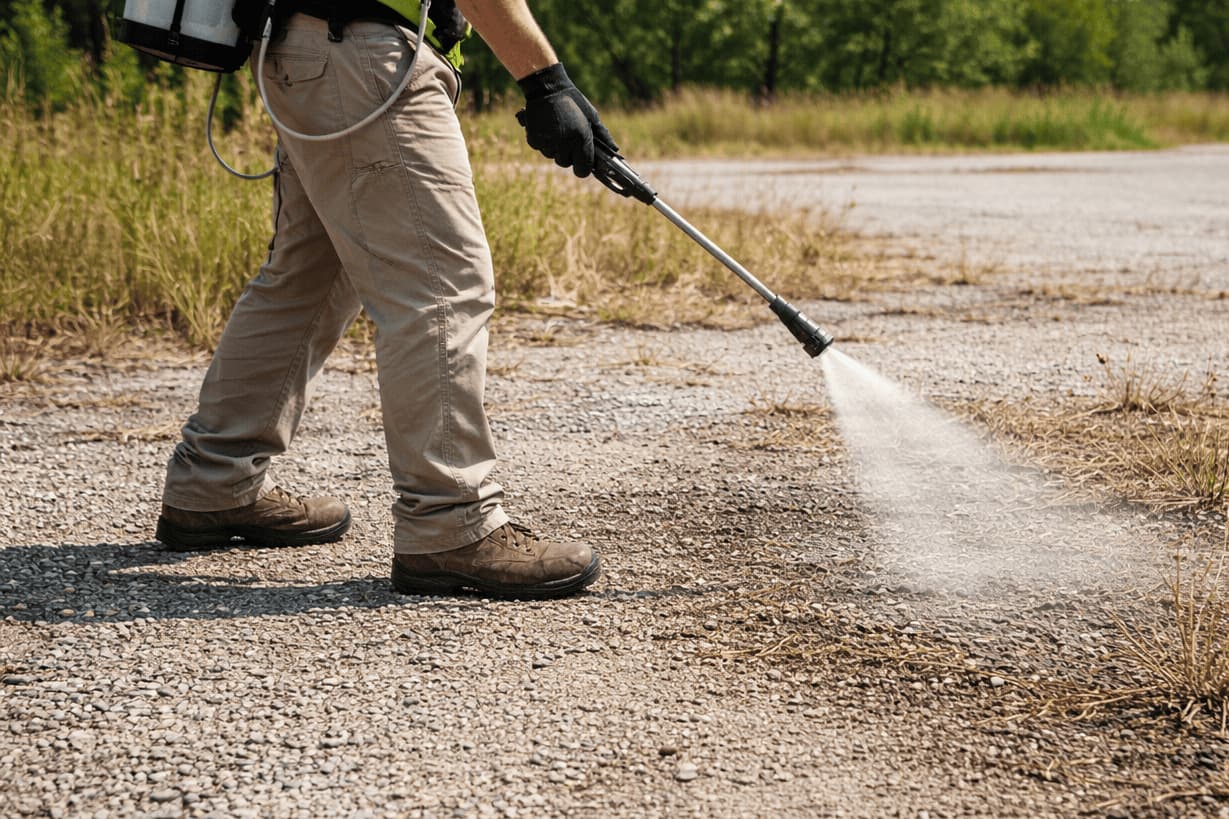
Non-selective weed control is designed for areas where complete vegetation removal is necessary for access, safety, or long-term maintenance. Common application areas include walking trails, rock and gravel surfaces, cracks and crevices, new construction sites, and utility corridors. These treatments target all plant growth to prevent regrowth and maintain clear, functional spaces. Pre-emergent and post-emergent herbicides, along with plant growth regulators, are selected based on the timing and severity of vegetation issues. This approach helps reduce ongoing maintenance needs and limits disruption caused by unmanaged growth.
Targeted vegetation control helps prevent invasive growth, protect operational areas, and reduce long-term maintenance by addressing problem plants at the right time with the right methods.
Ornamental Bed Weed Control
Ornamental bed weed control focuses on protecting planted landscapes, mulch beds, and decorative rock areas from invasive weeds. Weeds in these areas compete with ornamentals for nutrients and moisture, often reducing plant health and visual appeal. Targeted spot spraying and spreader applications allow for effective control without disturbing established plants. Both liquid and granular pre-emergent and post-emergent herbicides are used to prevent new weed growth and manage existing issues. Consistent ornamental bed weed control supports cleaner landscape lines and healthier plantings throughout the growing season.
Industrial Vegetation Control Services
Industrial vegetation control is designed for operational areas where unmanaged growth can interfere with safety, access, and infrastructure performance. These environments often require more intensive control methods to ensure long-term compliance and functionality. Services may include:
- Bareground treatments for complete growth prevention
- Long-term weed suppression using soil sterilants
- Vegetation management in utility corridors, railways, oil fields, and quarries
Broadcast, spot spray, and zone spray methods are used depending on site requirements. Herbicide programs often combine soil sterilants, pre-emergent, post-emergent, and liquid plant growth regulators to achieve durable results.
Invasive Brush, Tree Control & Chemical Mowing
Invasive brush and tree control addresses aggressive woody plants such as cedar, salt cedar, mesquite, and yucca that can overtake landscapes and unmanaged land. Control methods like cut stump treatments, basal bark applications, foliar spraying, and hack-and-squirt techniques are selected based on plant size and density. Chemical mowing is also used to suppress vegetation growth through broadcast herbicide applications, reducing the need for frequent mechanical mowing. These strategies help manage growth height, improve access, and limit long-term maintenance demands. Together, they provide effective solutions for large-scale and hard-to-manage vegetation challenges.
Texas Areas We Serve
- Georgetown
- Liberty Hill
- Leander
- Round Rock
- Cedar Park
- Jarrell
- Salado
- Hutto
- Pflugerville
- Taylor
- Harker Heights
- Belton
Need Help With This Service?
Request a quote and we will build a practical lawn plan for your property.
Book Consultation